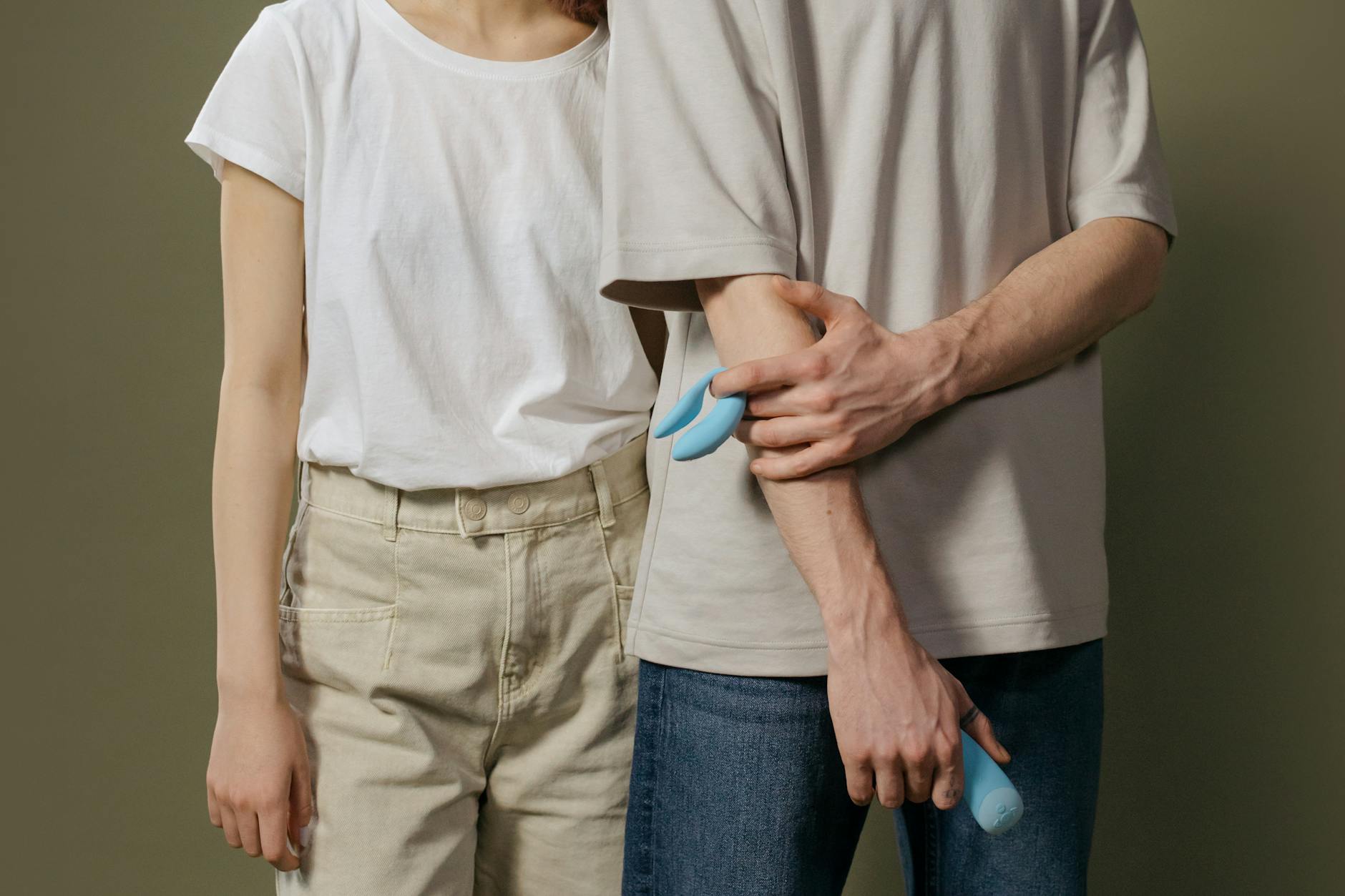
Let's name the thing nobody talks about
Partner mismatch on toys is real. One of you has fallen in love with a lemon clitoral vibrator. The other person is deeply attached to their wand. Neither of you is wrong. But suddenly, there's an unspoken question hanging over things: if I love this new toy and my partner doesn't, does that mean we're incompatible? Or does it just mean we like different things?
It's the second one. And there's actually a lot of pleasure available in that difference if you approach it right.
Why partners gravitate toward different tools
Here's what I see in my practice constantly: wand vibrators feel familiar and reliable. They deliver consistent, broad stimulation. If someone's been using one for years, it's like wearing a favorite sweater. The sensation is predictable. The trajectory is clear.
Lemon vibrators and other clitoral suction toys work completely differently. They use pulsing suction instead of vibration. That means the stimulation pattern is narrower, more concentrated, and the sensation builds differently. For some people, that narrower focus feels incredible. For others, it feels too intense or too localized.
Neither preference is about compatibility. It's about how your nervous system responds to different types of stimulation. Some people's clitoral tissue responds beautifully to broad vibration. Others find their most intense orgasms come from concentrated suction. Both are completely normal.
The conversation to have first
Before you bring toys into shared time, have the meta-conversation. Not during sex, not in the moment. Just you and your partner, sitting down, saying: "I've been curious about trying a lemon vibrator. I know you love your wand. I want to figure out how we both get to use what we like without it feeling weird."
That's it. You're not asking permission. You're not suggesting you need something your partner can't give you. You're saying: I want to explore this, and I also want us both to feel good.
Most partners respond well to that clarity. What they don't respond well to is silence followed by a new toy appearing, which can feel like a judgment on what you've been doing together.
The easiest entry point: side-by-side exploration
Start by using your lemon vibrator during solo time while your partner does their thing with their wand. Separately. Same room, same bed, but each of you focused on your own experience.
This does three things. First, it lets you figure out what you actually like about the lemon vibrator without pressure to perform or worry about timing. Second, it lets your partner see that this isn't about replacing them or their toy. Third, it builds a kind of ambient intimacy. You're both there, both enjoying yourselves, both present.
Many couples find this becomes their default pretty quickly. You each know your body. You each have a tool that works for you. You're in the same space. That's connection without needing perfect synchronization.
When you want to use them together
If you want to move toward using your lemon vibrator while your partner uses theirs during partnered time, the key is establishing what "together" actually means for your bodies.
Does it mean simultaneous orgasm? Probably not, and that's fine. Does it mean you're both being stimulated at the same time? Yes, ideally. Does it mean you're watching each other, touching each other, narrating what you're feeling? That's the part you get to decide.
Here's what I'd suggest: start with your partner using their wand on you while you hold your lemon vibrator. Not both at once. Your partner goes first with what they know. Once you're warmed up and approaching that edge, introduce the lemon vibrator. See what it feels like to have both sensations. The broad vibration plus the concentrated suction. Some people love that combination. Others find it overwhelming.
Then switch. You use your lemon vibrator on your partner. Observe what happens. Are they into it? Do they want to keep their wand nearby for the final push? Do they want to skip the lemon vibrator entirely and you just hold it while they use theirs? All of those are valid.
The reality check on sensation differences
Here's something nobody mentions: different toys can create genuinely different types of orgasms. A wand vibrator often builds to a broad, full-body release. A lemon clitoral vibrator often creates a more concentrated, intense peak that can feel almost electric.
Your partner might try your lemon vibrator and think it's nice but not as satisfying as their wand. That's not a failure. It just means their nervous system gets more out of the broad stimulation. You might feel the opposite. That's also completely fine.
The problem arises when someone feels like they have to prefer what their partner prefers. You don't. You get to like different things. You also get to use different tools. This isn't about merging your preferences. It's about making space for both.
What helps: communication during the moment
If you're using toys together, narrate a little. Not like a script. Just real things. "That feels amazing." "I want to slow down." "Keep going." "Try this angle." The kind of guidance you'd offer with hands anyway. Toys are just tools. The connection is still the conversation.
Some couples find it helps to set a light boundary: one person is "driving" at a time. You're not both using toys simultaneously and trying to coordinate. Instead, one partner uses theirs while the other supports. Then you switch. It takes pressure off timing and lets you both fully enjoy what you're doing.
Why your partner might never love the lemon vibrator. And why that's okay.
Let's be honest. You might introduce your partner to your lemon vibrator and they might try it once and never want to use it again. That happens. That's not a referendum on your relationship or your compatibility. It's just how bodies work.
What matters is that you each get to explore what feels good for you individually, and that you both feel safe bringing your actual preferences into shared time. If you love a lemon vibrator and your partner loves their wand, that's not a problem to solve. That's just the landscape you're working with.
Making space for different desires without feeling separate
The real fear underneath toy preferences is usually something like: does this mean we want different things? Are we drifting? Here's what I tell couples: having different preferences doesn't mean you want different partners. It means you have different bodies. That's always been true. Toys just make it more visible.
Intimacy isn't about wanting identical sensations. It's about knowing what your partner wants, supporting them in getting it, and trusting that they're doing the same for you. A lemon vibrator or a wand or a hand are all just vehicles for that knowledge and support.
The couples who navigate toy preferences best aren't the ones who like all the same things. They're the ones who say: "Your pleasure matters. My pleasure matters. Let's figure out how we both get there."
People Also Ask
Can we use a lemon vibrator and a traditional vibrator at the same time on one person?
Yes, though it takes some experimentation. Some people love the combination of broad vibration plus concentrated suction. Others find it overstimulating. Start with one tool, warm up, then introduce the second. If it doesn't feel good, that's not failure. Go back to one. Your body gets to decide.
What if my partner thinks my lemon vibrator is too intense for them?
The lemon vibrator's suction can feel stronger than a wand to some people because it's so localized. If your partner finds it intense, try starting at the lowest setting. Or use it for shorter bursts instead of continuous application. Or just accept that it's not their tool, and that's fine. You get yours, they get theirs.
Is it weird to use different toys in the same intimate session?
Not at all. It's actually pretty common. One partner might use a toy during solo stimulation while the other uses hands. Or you each have your go-to and you use them at different moments. There's no rule that says you have to both be doing the exact same thing.
How do I know if we're sexually compatible if we like different toys?
Sexual compatibility isn't about liking identical sensations. It's about being willing to explore together, communicate about what feels good, and respect each other's preferences. You can be wildly compatible and love completely different toys. What matters is the willingness to show up for each other's pleasure.
Should I ask my partner's permission before introducing a lemon vibrator?
Not permission exactly. A heads-up, yes. Something like: "I'd like to explore using a suction vibrator. I'm curious how it might feel. Would you be open to that?" That respects their presence in your intimate life without putting them in charge of your body. You're not asking if you're allowed. You're letting them know what's coming.
What if my partner feels threatened by my interest in a new toy?
That's worth talking through directly. Sometimes a new toy triggers feelings about adequacy or being replaced. Those feelings are real and they deserve conversation. Often what helps is naming it: "I'm interested in this because it gives me a different sensation, not because anything's wrong with us." You're adding, not subtracting. Make that clear.
The couples I work with who navigate toy preferences best aren't avoiding the differences. They're leaning into them. They're saying: you like that, I like this, and I want to know what each of our bodies is experiencing. That kind of curiosity builds intimacy way more than perfect synchronization ever could.
If you're still figuring out what works for both of you, that's the right place to be. The conversation itself is the intimacy. Keep having it.