
The Setup That Everyone Gets Wrong
Here's what happens: One partner decides they want to use a lemon vibrator or other clitoral toy. The other partner says, "I want to be involved." Both people assume this means the same thing. Spoiler. It doesn't.
Involvement could mean watching. Could mean helping guide the toy. Could mean penetration during use. Could mean proximity without touching. Could mean they feel excluded from your pleasure, and they're trying to say that badly. The word "involved" is doing so much work, and nobody's actually defined it.
That gap is where most couples get stuck. Not because the toy doesn't work, but because they skipped the conversation.
What "Involvement" Actually Means (And Why It Matters)
When your partner says they want involvement during your solo pleasure, what they're usually expressing is one of three things. Sometimes all three at once.
First: they want to feel included in your pleasure rather than excluded from it. This is about emotional closeness, not necessarily about direct participation. Many people feel like toys are a threat. They're not always, but the worry is real. Your partner might be saying, "I want to be in the room with this, not locked out."
Second: they're attracted to watching. Some partners find it genuinely arousing to see their significant other use a clitoral vibrator like the Lem. This is common, and it's worth acknowledging without shame. It's not weird. It's just another flavor of desire.
Third: they want to participate in a specific way. This could be handling the toy for you, being inside you while you use it, or creating the conditions that let you use it (controlling vibration patterns, deciding pacing, etc.). This is collaborative pleasure, and it requires negotiation.
Figuring out which one (or which combination) matters to them is the actual work. The toy is easy. The conversation is the skill.
The Conversation You Actually Need to Have
Start here: "When you say you want to be involved, what does that look like for you?" Then listen without immediately offering solutions.
Listen for what they're not saying. If they say "I want to watch," are they also saying "I feel replaced"? If they say "I want to help control it," are they also saying "I want more power in this dynamic"? The surface request often masks a deeper need.
Then ask yourself: What's your boundary? You don't have to want involvement. Solo pleasure is solo for a reason. If you use a lemon vibrator because you need time alone with your own sensation, that's legitimate. And your partner needs to respect it. This conversation needs to go both directions.
If you're open to involvement but nervous, say that too. Bring your hesitation to the table. "I love the idea of you being involved, and I'm also a little worried that I'll feel self-conscious" is honest and workable. "I want to try it and see how it feels" is a real answer, not a cop-out.
Practical Setups That Actually Work
Let's assume you both want to move forward. Here are the most common arrangements, and why they work.
The Proximity Play: You use the toy while your partner is in the room, touching you everywhere except where you're using the vibrator. This works because it's partnered without being collaborative. You're in charge of the clitoral stimulation (whether it's the Lem or another toy). They're adding sensation and connection elsewhere. This one tends to feel intimate without requiring negotiation of control. Many couples report this feels more connected than solo play but without the pressure of direct involvement.
The Guided Play: Your partner holds the vibrator or helps position it while you direct. This works when both people are communicative in real time. "Up a little, now slower, now harder." If your partner tends toward impatience or doesn't read your nonverbal cues well, this one gets rough. But if you communicate well normally, this can deepen connection. You're teaching them exactly what works, and they're learning your body in a new way.
The Integrated Play: Your partner penetrates you (with a penis, fingers, or another toy) while you use a clitoral vibrator. This works because the sensation layers. You're responsible for your own clitoral stimulation. They're responsible for penetration. There's less chance of stepping on each other's toes because you're working different zones. The rhythm might be different, and that's part of why it works. Neither person has to accommodate the other's pace in the same way.
The Voyeur Play: You use the toy, they watch, no touching. This works because the boundary is crystal clear. You're fully in control of your pleasure. They get the experience of closeness and arousal from witnessing. No negotiation mid-scene. Some people find this actually more intimate than direct participation because the attention is singular and present.
Each of these has different prerequisites. Proximity play needs comfort with being touched while aroused. Guided play needs trust and communication. Integrated play needs compatible rhythms or patience to find them. Voyeur play sometimes needs reassurance that watching isn't weird or demeaning. Know which setup aligns with your actual comfort.

Photo by cottonbro studio on Pexels
How Lemon Vibrators Actually Change This Dynamic
Clitoral suction toys like the Lem work differently than traditional vibrators, and that difference matters when a partner is involved.
With a traditional vibrator, a partner can hold it, move it, control the speed. The suction function of a clitoral vibrator is less transferable. The seal matters. You might need to stay relatively still. This actually shifts the dynamic away from "partner does it to me" and toward "partner is present while I do this."
This isn't a limitation. It's actually clarifying. A lemon vibrator almost naturally pushes you toward either proximity play or voyeur play. The toy demands your active participation. Your partner has to respect that. They can't just take over and have it work the same way. This can actually reduce anxiety because the power structure is clear: this is your pleasure, you're driving it, they're present.
The intensity of suction stimulation also means you might need different prep than with a traditional vibrator. Longer warm-up time, lubrication, pelvic floor relaxation. If your partner is helping, make sure they understand what you need beforehand. "I need about ten minutes to warm up before I want suction" is useful information. It prevents the awkward moment where they think you're ready and you're not.
When Your Boundaries Shift
Here's the thing nobody talks about: what you want can change. You might try involvement and love it, then next time want solo play. You might start voyeur and want to shift to proximity. Your needs aren't fixed. And that's fine.
Set a check-in rhythm. Not a big formal conversation every time. Just, "Did that work for you?" and "Do you want to try something different next time?" This keeps the dynamic flexible instead of locked into one configuration.
Also: solo pleasure and partnered pleasure can coexist. You don't have to choose. Some people use a lemon vibrator solo twice a week and with their partner once a week. Different occasions, different needs, same toy. This is actually the healthiest setup because neither person is burdened with meeting all of your pleasure needs.
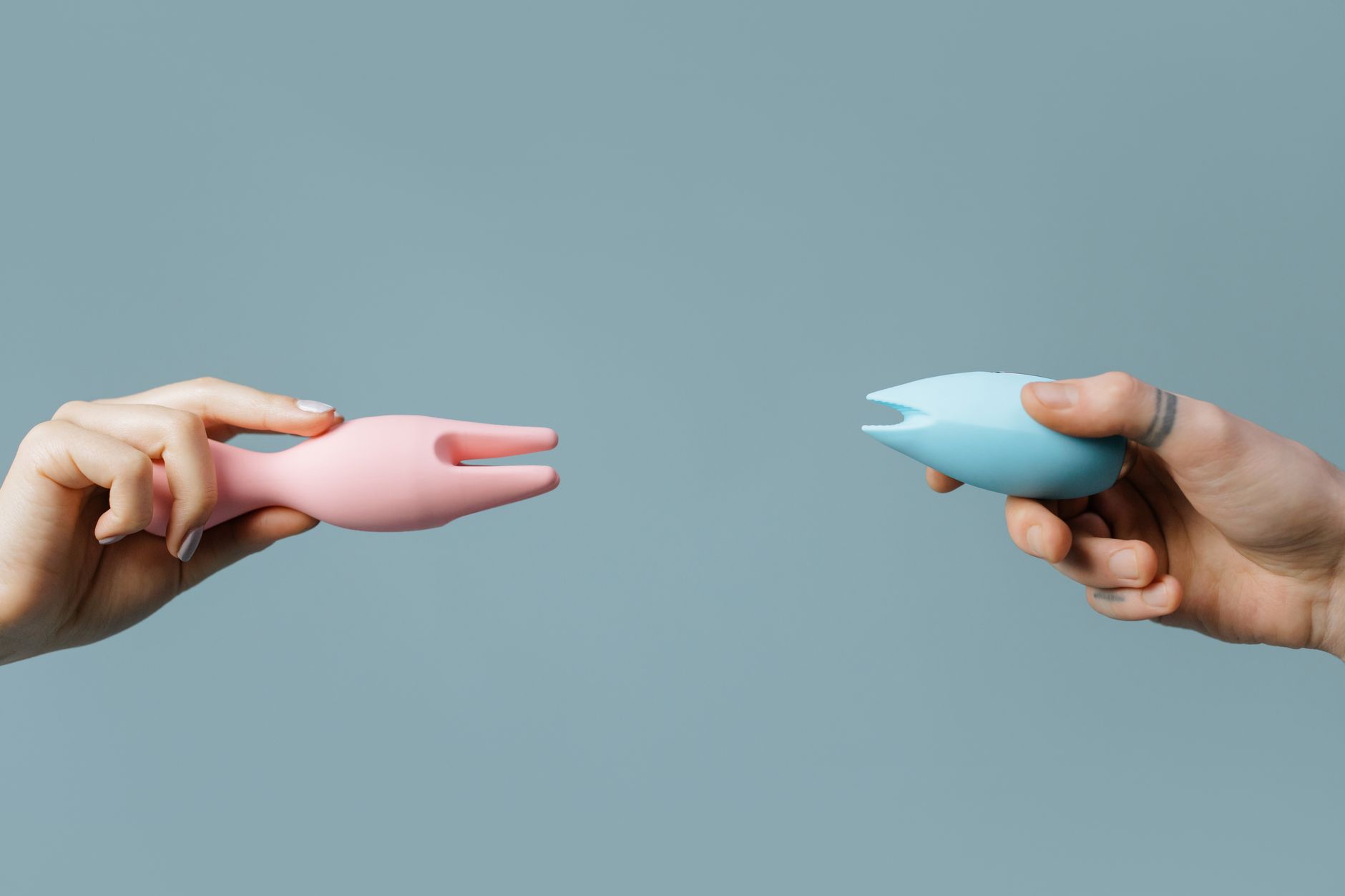
Photo by cottonbro studio on Pexels
The Permission You Might Need
If you're worried that using a lemon vibrator with your partner present means you've surrendered your autonomy, you haven't. Pleasure doesn't have to be solo to be yours. Involvement doesn't mean loss of control. These aren't opposites.
Your partner wanting to be involved during your pleasure is sometimes a compliment. It means they want closer access to you. It means your sensation matters to them. It doesn't diminish what you feel. It might actually amplify it.
That said, if involvement feels pressured or obligatory, that's a different conversation. You don't owe anyone access to your body or your pleasure, even in a partnership. "I need this to be solo right now" is a complete sentence. And if that's met with guilt or pressure, that's a relationship issue worth addressing separately.
Frequently Asked Questions
How do I introduce a clitoral vibrator to my partner for the first time if they've never seen one?
Show it to them when you're not in the moment. Let them hold it, feel the different patterns, ask questions. Make it normal. Many partners are less anxious about toys once they understand how they work and that they're just tools. The mystery is often scarier than the actual device. Explain what clitoral suction is, how the Lem differs from a traditional vibrator, and why you want to try it. Anxiety usually drops once they get practical information.
What if my partner gets insecure when I use a vibrator?
Insecurity about toys is almost never actually about the toy. It's usually about adequacy or replacement fears. Address the belief directly: "This doesn't mean you're not enough. This means my body needs different kinds of stimulation sometimes." You can't convince someone with pleasure that they're not being replaced. You can only talk about it when you're not actively using the toy. And sometimes professional help is worth it. A couples therapist trained in sex-positive approaches can help untangle this faster than you can alone.
Can I use a lemon vibrator during partnered sex if my partner is inside me?
Yes, absolutely. This is integrated play, and it works well. The key is communication about angles and rhythm beforehand. A clitoral vibrator adds stimulation but doesn't necessarily change the penetration. You'll figure out quickly what position and pattern feel good. Start with lower intensity settings and work up.
What if my partner wants to control the vibrator but I'm worried they won't know what I like?
Tell them. In the moment. "A little to the left, more pressure, hold it there, now try pattern three." Most partners are happy to take direction if they're given it clearly. Think of it like teaching someone your favorite position. You guide them. They learn. That's the collaboration.
How do I know if I want involvement or if I'm only doing it because my partner asked?
Sit with the question alone. No partner, no pressure. Do you feel drawn to the idea? Does it turn you on, or does it feel obligatory? Your gut knows the difference. If it feels obligatory, that's information. You might be able to offer a smaller compromise (they can be in the room but further back, or you'll try it once and check in). But don't override your own comfort to keep the peace. That builds resentment.
What if I love solo play with a lemon vibrator and my partner interprets that as rejection?
It's not rejection of them. It's preference for a specific context. You might explain it this way: "When I use this alone, I can focus entirely on sensation without any other awareness. With you, my awareness shifts to our connection, which is beautiful and different. Both feel good. Neither cancels out the other." If they still feel left out, that's a relationship conversation worth having with a therapist, not something the toy can fix.
The Real Work Is the Conversation
The lemon vibrator is the easy part. Two people figuring out how to share pleasure while respecting each other's needs and boundaries. That's the skill. That's what actually deepens a relationship.
If you and your partner want involvement to work, start by asking what involvement actually means. Listen without defending. Be honest about your own needs. Pick a setup that honors both of you. Check in afterward. Be willing to adjust. This is how it becomes more than just using a toy together. It becomes a way of knowing each other better.
Your pleasure is worth that conversation. And your partner's need to be involved is worth taking seriously too. When both things are true at once, that's when something real happens.
If you want more guidance on navigating these conversations or exploring different approaches, we're here to help. Get in touch.
References
Gottman, J. M., & Silver, N. (2015). "The Seven Principles for Making Marriage Work." Harmony Books. (Relationship communication frameworks)
Meston, C. M., & Frohlich, P. F. (2000). "The neurobiology of sexual function." Archives of General Psychiatry, 57(11), 1012-1030. (Neurological basis of arousal and pleasure)
Basson, R. (2005). "Women's sexual function and dysfunction: Current uncertainties, future directions." International Journal of Impotence Research, 20(6), 466-478. (Sexual response variations)