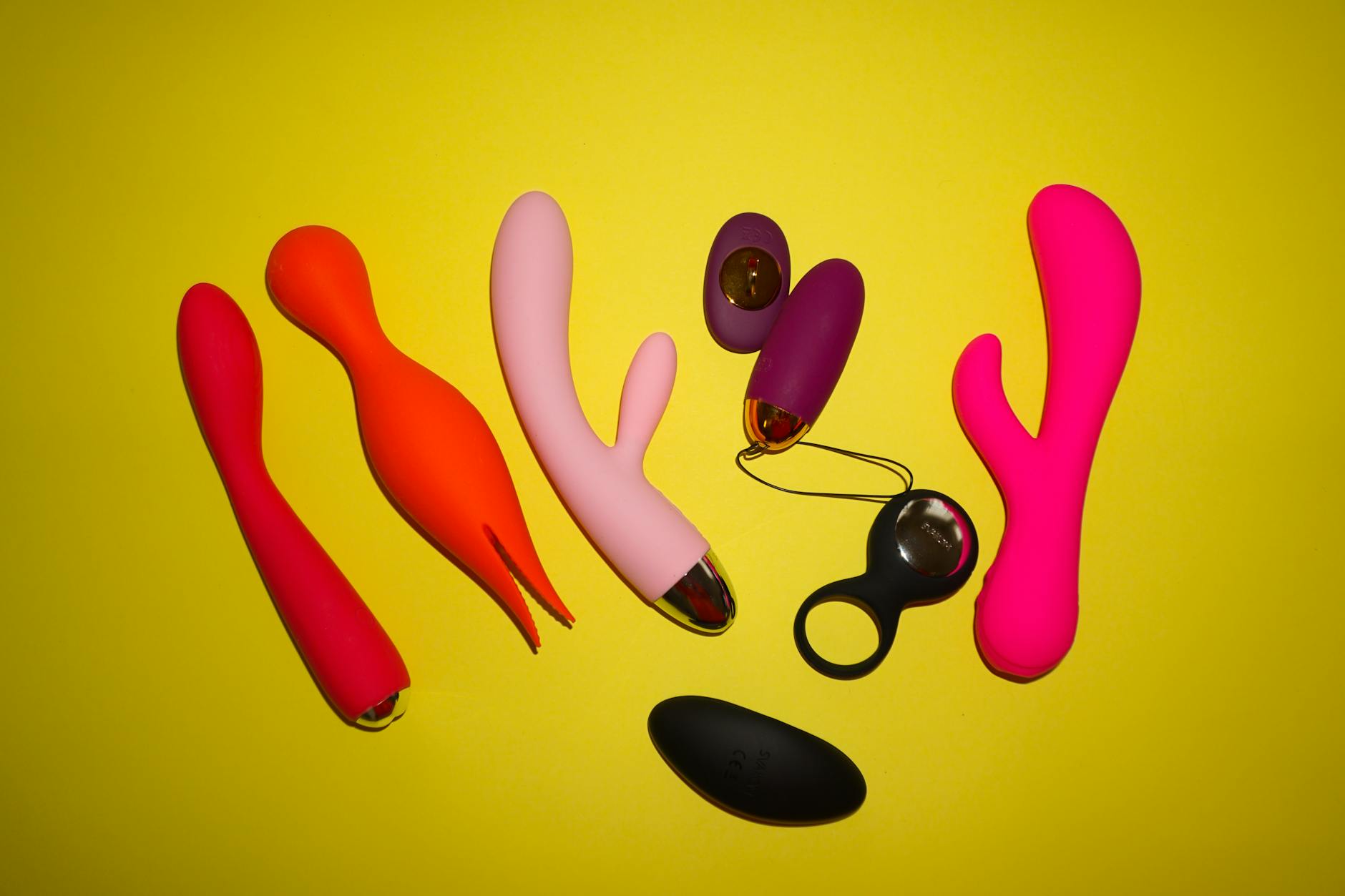
Let's name what's actually happening
Your partner sees you with a lemon vibrator or any clitoral vibrator and hears a silent message they didn't ask for: "You're not doing it for me." That's the insecurity talking, and it's wildly common. They want to be involved. They also want to believe they alone are enough. Those two things are colliding in their head, and nothing short of a real conversation and concrete action will settle it.
Here's what I see in my practice: partners aren't threatened by the vibrator itself. They're threatened by the idea that they've been missing something, that they've failed in some way, or that pleasure now requires something they can't provide. Introducing a lemon vibrator with someone who feels this way isn't about the toy. It's about restructuring how you both think about pleasure, partnership, and what "enough" actually means.
Why insecurity shows up here
Most of us grew up with a specific story about sex: one person gives, one person receives, and if it works, it's because of some chemistry or skill that lives inside one body. That story is comforting because it's simple. But it's also wrong, and it's the root of almost every bit of toy-related insecurity I encounter.
The truth is messier and, honestly, better. Pleasure is collaborative. Bodies change. Stress changes things. Birth control, hormones, medication, life—they all shift how sensation registers. A partner who's willing to add tools to the experience isn't admitting defeat. They're saying, "Your pleasure matters to me more than my ego." That's the opposite of insecurity. That's strength.
Your partner doesn't see it that way yet. They see a lemon clitoral vibrator as evidence that something is broken in them or in the relationship. So the first move is to externalize the problem. The issue isn't your partner or the lemon sucker. The issue is that arousal is complicated, and two bodies coordinating sensation together requires tools and honesty.
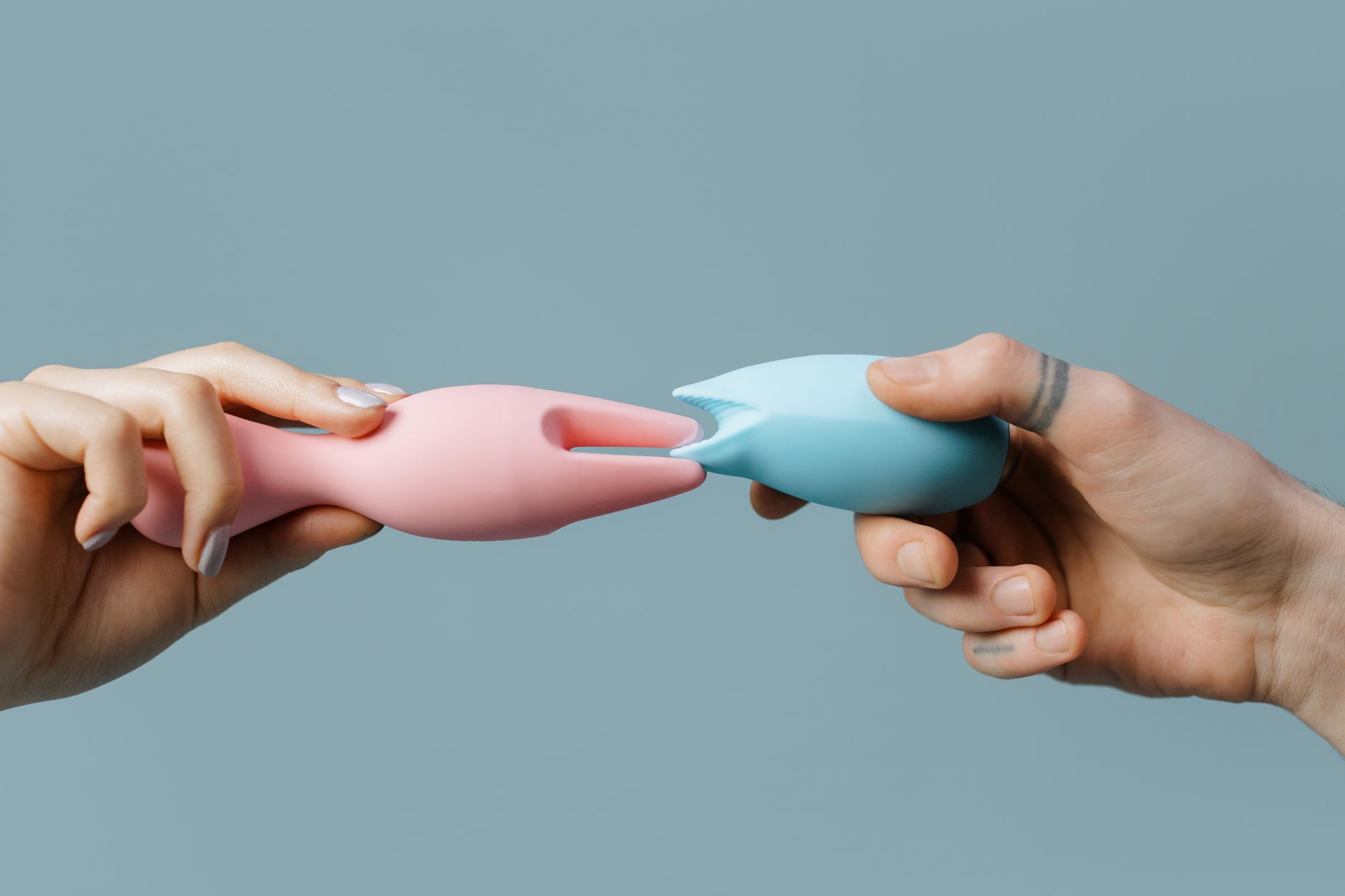
Photo by cottonbro studio on Pexels
The conversation before you introduce the toy
Don't hand your partner a lemon vibrator and expect them to understand. Have this conversation when you're not in bed, not aroused, and not about to have sex. Timing matters.
Start with specificity. "I've noticed that I take a while to get there, and I think part of that is stress," or "My body responds differently than it used to, and I want to explore that together instead of ignoring it." Make it about your body and your experience, not about their performance.
Then make it collaborative. "I want to use a vibrator sometimes, and I'd love it if you were part of that. I'm not asking you to replace yourself. I'm asking you to be curious about my body with me." The difference between "I need this" and "I'd like us to figure this out" is the difference between deepening intimacy and triggering a shame spiral.
Be ready for defensiveness. "Does this mean I'm not enough?" or "I should be able to do this for you." Don't argue. Validate. "I know you care about my pleasure. That's exactly why I want to do this together. I want us both to feel good." Short sentences. No explaining away their feelings.
Three ways to introduce a lemon vibrator without triggering shutdown
Option 1: They control it.
Start by handing them the lemon vibrator. Let them hold it. Show them the settings. If they apply it to you, they're not feeling replaced. They're participating. They're the one making pleasure happen. This is often the fastest path to buy-in because it reframes the toy as a tool they can use, not a judgment on their skills.
Option 2: You both hold it together.
Sit between their legs or lie beside them. Guide their hand to hold the vibrator with you. This creates a felt sense of partnership. You're not going solo with the toy while they watch. You're doing it together. That distinction matters more than you'd think. Many partners find this version settles their worry because there's no separation between you and them—the toy is just an extension of shared touch.
Option 3: They use it on you while they touch you differently.
This is the choreography shift. While they're using the lemon clitoral vibrator on your clitoris, they're inside you, kissing your neck, or holding you. The toy is augmenting their touch, not replacing it. You feel their body and the vibration at the same time. It's additive, not substitutive. Many insecure partners relax fastest with this setup because they can still feel deeply connected.
What to actually say when the moment arrives
Don't go silent. Talk. "I love when you do this. I want to add this too." Keep checking in. "Does this feel okay to you?" and "How are you feeling?" aren't interruptions. They're the connective tissue that keeps insecurity from spiraling in the dark.
If they look uncomfortable, pause. "What's coming up for you?" Listen without defending. Their insecurity might be a whole story: "I feel like I'm watching instead of being part of it." Okay. You now know what to fix. Switch to Option 2 or 3. Let them hold the lemon sucker. Give them a role that isn't passive.
After sex, debrief. "That felt really good. Thank you for trying that with me." Make it explicitly about partnership, not about how much better the vibrator made things. Don't say, "That was so much more intense." Do say, "I loved that we did that together."
The long-term reframe
Insecurity doesn't vanish after one conversation or one experience. It settles gradually, over repetitions. Each time you use a lemon vibrator together and nothing bad happens—no rejection, no humiliation, just more pleasure and more closeness—your partner's brain learns something new. The toy isn't a threat. It's a sign that you're both invested in discovering what feels good.
After a few times, try stepping back a little. Let your partner use the lem vibrator on you solo while you guide them. Let them experiment with pressure and timing. Once they understand the tool, they often become genuinely curious about it. Insecurity stops being about their inadequacy and starts being about learning your body better.
Some partners eventually ask to use it on themselves too. Some discover they like watching more than they thought. Some find that using a clitoral vibrator together opens conversations about their own pleasure that were locked before. The insecurity was often just the first barrier. On the other side is usually real intimacy.
When insecurity is deeper
If your partner consistently shuts down, becomes hostile, or uses the vibrator to reinforce a story that something is wrong with them—"See, you need this because I'm not good enough"—this might be worth working through with a relationship therapist. That's not toy resistance. That's anxiety or shame that needs professional support.
A good therapist can help you both separate the toy from the deeper story you're telling yourselves about your bodies, your desirability, and what partnership means. Sometimes the lemon vibrator is just the visible thing. The real work is underneath.
What actually changes
When you navigate this well, three things happen. First, you learn to talk about pleasure explicitly and without shame. That skill carries into everything else. Second, you discover that your partner is capable of growth—they can sit with discomfort and move through it. That builds trust. Third, you find out what your body actually wants when you're not performing for anyone. That's the real gift.
The lemon clitoral vibrator was never the point. It was just the doorway. Your insecure partner isn't resisting the toy. They're resisting the vulnerability of being known more deeply. Once they understand that letting you have pleasure—whatever that takes—is the most intimate thing they can do, the toy becomes what it actually is: just a tool that makes the connection better.