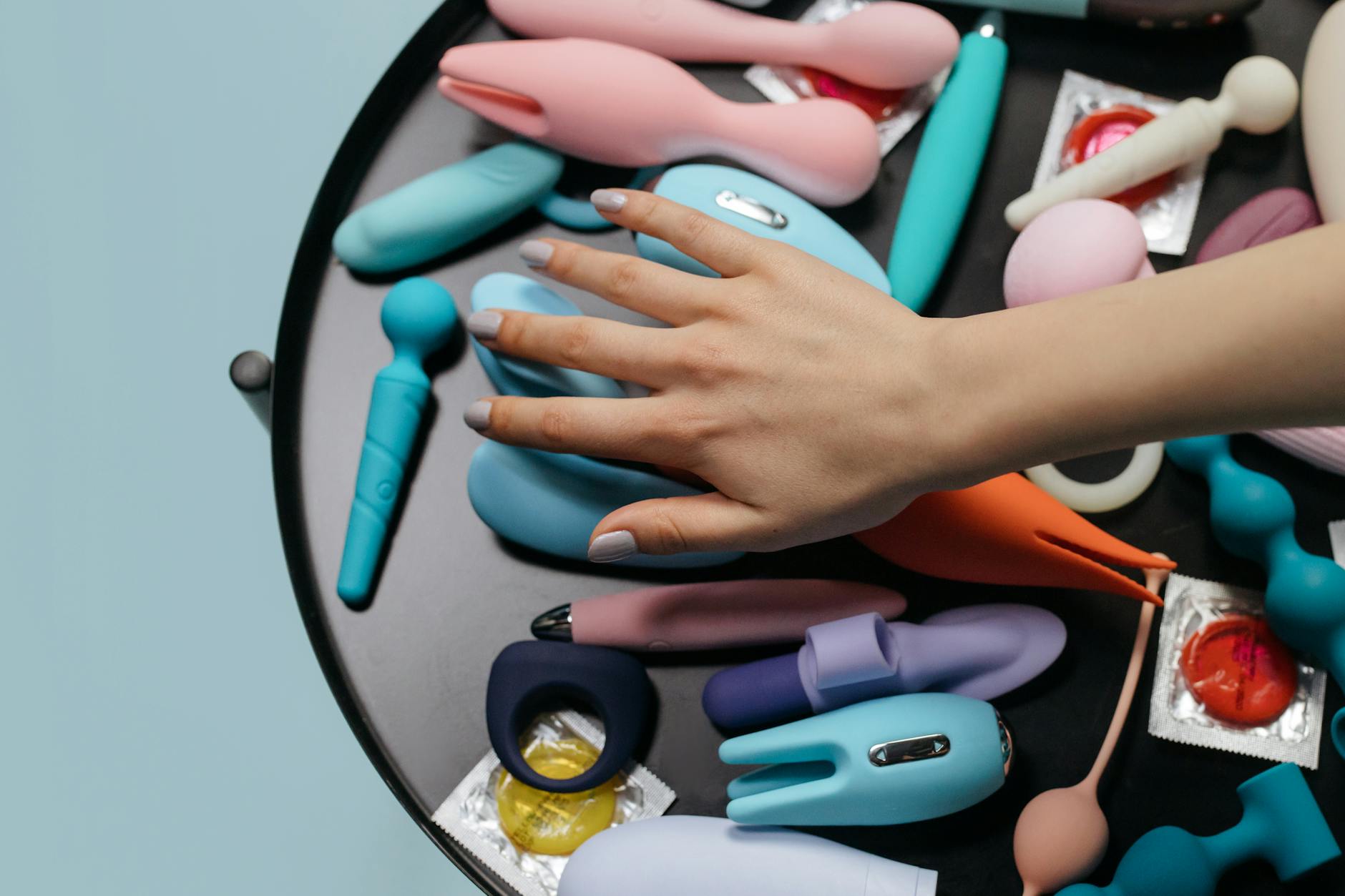
Here's the thing nobody says out loud
You love your partner. You're attracted to them. And you want sex more often than they do. This mismatch isn't a sign that something is broken. It's one of the most common friction points in long-term relationships, and it sits at the intersection of desire, shame, and logistics in ways that are surprisingly hard to untangle.
Most couples never talk about it directly. Instead, they create a quiet resentment where one person feels rejected and the other feels pressured. A lemon vibrator doesn't solve the mismatch, but it can completely reframe how you both experience it.
Why the mismatch exists (and why it's not about you)
Libido difference isn't about whether your partner finds you attractive. It's about baseline desire, stress load, health, hormones, and how sexuality got wired into their nervous system. Two people in the same relationship can have vastly different thresholds for sexual interest, and neither of them is wrong.
What usually happens is the higher-desire partner starts editing themselves. They initiate less. They hint at interest and read rejection into a tired "not tonight." They begin to feel unsexy. Meanwhile, the lower-desire partner feels guilty and pressured, which tanks their desire even further. You're both trying to protect yourselves, and the gap widens.
That's where the pattern gets stuck.
The permission piece
Here's what a lemon clitoral vibrator does that nothing else quite does. It gives the higher-desire partner explicit permission to have pleasure on their own terms, outside the framework of partnered sex. This sounds obvious until you sit with the shame most people carry about self-pleasure when they're in a relationship.
There's often an unspoken rule: if you want sex from your partner, you shouldn't be satisfied on your own. Using a toy becomes proof that you're "desperate" or that your partner isn't enough. None of this is rational, but it lives in the body as real guilt.
When you normalize using a lemon vibrator as part of your private sexual life, you're actually reducing the pressure on your partner. You're no longer channeling all your sexual energy toward them. You're taking responsibility for your own pleasure. Paradoxically, this often makes your partner want you more, not less.
Three ways to integrate a vibrator into mismatched desire
Solo sessions without secrecy. The healthiest approach is telling your partner you're using a vibrator on nights when they don't want sex. Not asking permission. Not treating it like a dirty secret. Just stating it matter-of-factly: "I'm going to take care of myself tonight." This removes the shame spiral and also creates a clear boundary. Your partner can say "I need sleep" without guilt, because they know your needs aren't going unmet.
Shared touch, solo stimulation. Some couples find a middle ground where they're intimate together, but the higher-desire partner uses a lemon vibrator on themselves while their partner is present. This might mean mutual masturbation, or your partner touching you while you use the toy, or simply being naked in bed together while you take care of your own orgasm. It's partnered in energy but independent in execution. The lower-desire partner doesn't have to perform; they just have to be present.
The honest conversation first. Before any of this works, you need to name the mismatch without blame. Not "You never want sex," but "I need sex more often than you do, and I'm starting to feel resentful about managing that alone." Your partner probably already knows. Naming it just stops the silent treatment from metastasizing. Then you can actually problem-solve together.
What not to do
Don't use a vibrator as a substitute for sex if what you really want is your partner. There's a difference between self-pleasure and avoidance. If you're using a lemon clitoral vibrator every night because initiating with your partner feels impossible, you're papering over a much bigger conversation that needs to happen.
Don't surprise your partner with a vibrator in bed. The first time they see it should not be during an intimate moment. Hand it to them beforehand. Explain what you're doing and why. Normalize it before it appears.
Don't expect a toy to fix a relationship problem. If the libido mismatch is part of a larger pattern of disconnection, avoidance, or unresolved conflict, a vibrator will just become another thing you're both uncomfortable with.
When mismatched libido signals something deeper
Sometimes a lower libido is actually depression, burnout, medication side effects, or past sexual trauma. If your partner's desire has shifted recently, it's worth asking whether something changed in their life or body. A gentle check-in is different from pressure: "I've noticed you seem less interested in sex lately. Is something going on that I should know about?"
If they say yes, listen. Don't try to fix it with better foreplay or a new toy. Sometimes people need professional help, therapy, or a medication adjustment. Your lemon vibrator isn't going to heal someone's depression.
But if the mismatch is just who they are as a person, and it's who you are as a person, then you have a different kind of problem to solve. That's about compatibility and whether you can both live with the difference.
The reframe that actually helps
Mismatched desire doesn't mean you're incompatible. It means you're two different people with different baseline drives. Some of the strongest, longest-lasting relationships I've worked with have one partner with significantly higher libido than the other. The difference is they stopped treating it like a failure and started treating it like data.
They created a rhythm that works for both of them. Sometimes that means partnered sex twice a week and the higher-desire partner using a vibrator on off-nights. Sometimes it means a conversation about opening up. Sometimes it means accepting that sex happens less often than they'd like, and they manage their own desire independently.
The tool isn't the toy. The tool is honesty. A lemon vibrator just makes it easier to be honest, because it removes the blame and the pressure and the shame.
FAQ
Can using a vibrator actually help if my partner thinks toys ruin intimacy?
Probably not, unless you address the belief first. Have the conversation before you introduce a toy. Ask them where that comes from. Sometimes it's rooted in old ideas about what "real" sex is. Sometimes it's about insecurity. Understanding the belief makes it easier to walk through why a vibrator might actually deepen intimacy rather than cheapen it.
Will a lemon vibrator make my partner less interested in sex with me?
Research suggests the opposite. When a higher-desire partner has access to reliable self-pleasure, they tend to feel less resentful and more connected. But it depends on the conversation you have about it. If you use it secretly or as a punishment, it becomes a wedge. If you use it openly and matter-of-factly, it often becomes a non-issue or even something your partner finds sexy.
What if my partner wants to use the lemon vibrator with me, but I'm not sure that's what I want?
That's fair. You don't have to say yes. You can say "I want to start with using this on my own first, and maybe we can revisit that later." Enthusiasm matters more than inclusion. A vibrator that feels forced is just stressful for both of you.
How often should I use a lemon clitoral vibrator if I'm in a relationship?
As often as you want. There's no rule. Some people use one several times a week. Some use one once a month. The frequency should feel good to you, not like you're making up for something your partner isn't giving you. If it feels like punishment or compensation, you've drifted back into shame territory.
Is it selfish to want more sex than my partner wants to have?
No. Your desire is not selfish. How you manage the mismatch determines whether you're being respectful or not. Pressuring your partner into unwanted sex is selfish. Demanding they want sex as often as you do is unrealistic. Taking responsibility for your own pleasure while respecting their boundaries is mature.
Should I tell my partner I'm looking at lemon vibrators if we haven't talked about toys before?
Yes. Start with the broader conversation first: "I've been thinking about how we navigate our different libidos, and I'm wondering if bringing in a vibrator might help." You're not ambushing them. You're inviting them into a decision. They might have thoughts about it. They might surprise you and be into it. But they should never find out by accident.
The bottom line
Mismatched libido is not a dealbreaker. It's a management problem. A lemon vibrator is a tool that makes the management easier, but only if you've already done the harder work of talking honestly about what you both want and need. Use it as part of a conversation, not as a way to avoid one. Your partner's lower libido and your higher desire can coexist peacefully once you stop treating one like a problem that needs fixing.