Let's start with the honest part
You've just moved across the country for a new job. Or you've left a career that consumed you for fifteen years. Or you've finally come out, or ended a major relationship, or shifted your whole identity in some fundamental way. And suddenly, pleasure feels distant. Not gone, exactly. Just. Muted.
This is not a personal failure. This is your nervous system recalibrating after upheaval. Big transitions dysregulate you. When you're dysregulated, pleasure is the first thing to go quiet. Your body is in resource-conservation mode, not expansion mode. That's actually working exactly as designed. The problem is nobody explains this, so you assume something is broken inside you.
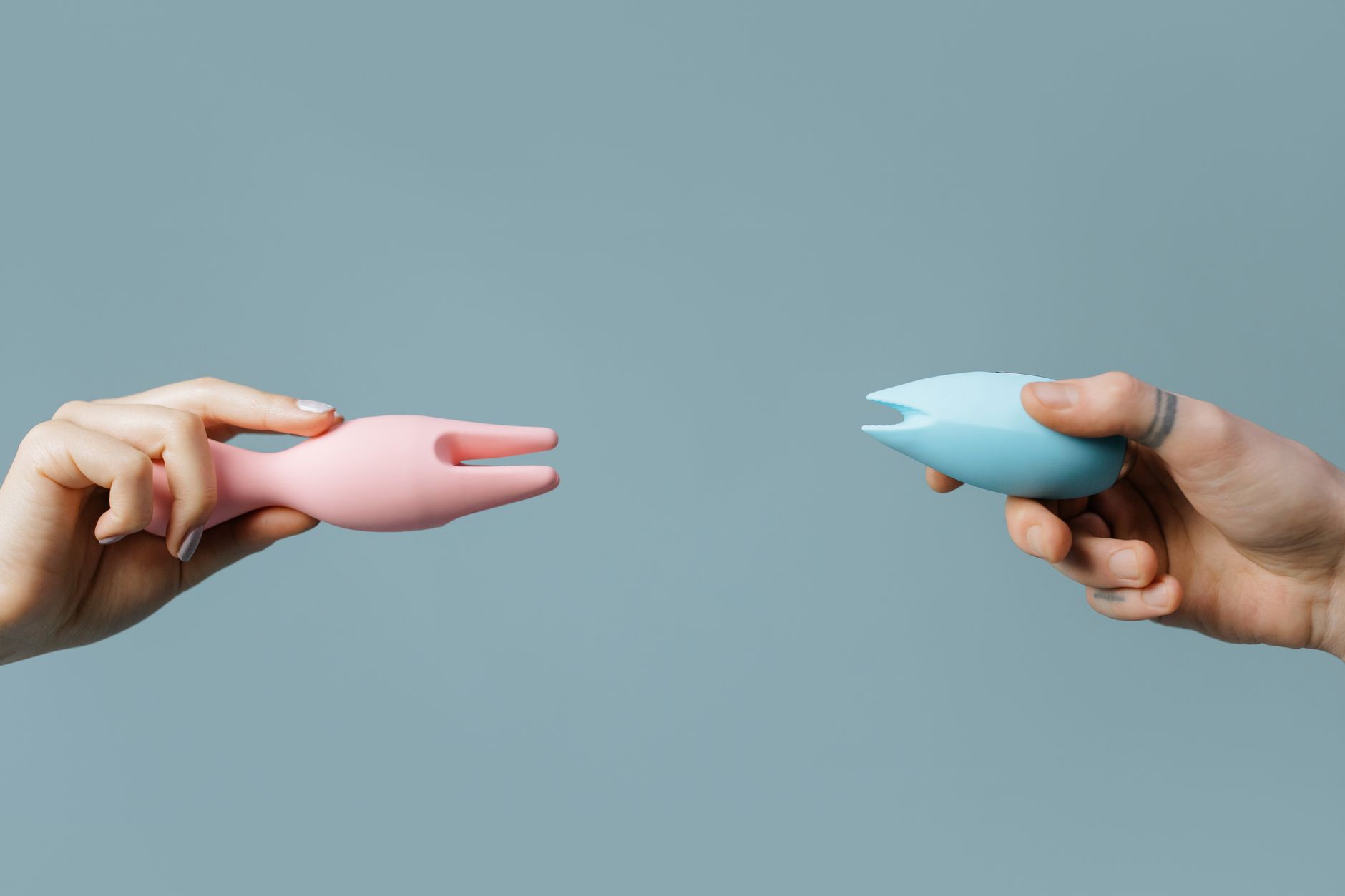
Here's what I've seen over decades of working with people through major life shifts: reconnecting with sensation through tools like a lemon clitoral vibrator isn't about willpower or getting "back to normal." It's about meeting your nervous system where it actually is right now.
Why big transitions flatten pleasure
When you undergo a significant life change, your brain is running three simultaneous processes. First, it's actively grieving what you've left behind (even if what you left was painful or limiting). Second, it's scanning the new environment for threats. Third, it's cataloging every new social and logistical detail. That takes bandwidth. A lot of it.
Your nervous system has finite resources. It prioritizes survival and orientation. Pleasure is a luxury item in that hierarchy. When your brain senses ambiguity or instability, it downregulates arousal. You're not numb because something is wrong with you. You're numb because your system is being protective.
Hormones also shift during major transitions. Cortisol stays elevated for weeks or months after relocation or career change. High cortisol suppresses both desire and arousal. Sleep usually suffers. Sleep deprivation alone kills sensation. Add in the psychological disorientation of a new environment, and pleasure becomes almost inaccessible.
The specific challenge of sensation after upheaval
You might notice that even stimulation that used to work doesn't register the same way. A partner's touch feels like data, not desire. Orgasms, if they happen, feel flat. You might go weeks without thinking about sex at all. Sometimes that worries you. Sometimes it's almost a relief.
This is the part that feels scariest to most people: they worry the pleasure is gone for good. That they've fundamentally changed, lost their libido, entered some permanent low-sensation state. The stories we tell ourselves get dark fast.
What's actually happening is more contained than that. Your arousal threshold has risen. You need more intensity, longer warm-up, and significantly more psychological safety to access pleasure. A lemon vibrator, specifically, works better during transitions than other tools because it doesn't require you to build arousal from a whisper. Suction-based stimulation can bypass some of the neurological "wait, is this safe?" conversations your brain is having.
How to restart sensation with a lemon suction toy
Three things change after a major transition. One. You need a tool that delivers consistent, recognizable sensation without requiring you to interpret subtle cues. A lemon clitoral vibrator does this. It's simple. Intensity is clear. There's no ambiguity.
Two. You benefit from a lower barrier to entry. Wand vibrators or traditional vibrators require you to create arousal before using them. A lemon vibrator can generate sensation on its own. You can use it at pattern one or two and notice whether that creates interest. Most suction toys work bottom-up: the sensation itself creates arousal, rather than requiring arousal first.
Three. You need permission to use it without a larger narrative. After a transition, pleasure can feel selfish or frivolous. The fact that you're rebuilding your whole life can make solo pleasure feel indulgent. Reject that. Solo sensation during a major life change is actually nervous system regulation. It's an anchor point. Treat it that way.
When you first use a lemon vibrator during or right after a big transition, start at the lowest setting. Set a timer for 10 minutes, not with a goal of reaching orgasm, but with the goal of noticing sensation. Do you feel the suction? Does it create interest, or just neutral data? Neither answer is wrong. You're gathering information. After three to five sessions of 10 minutes, you'll probably notice your sensitivity returning.
Creating the psychological conditions for pleasure to return
Sensation doesn't return in a vacuum. Your environment has to signal safety. After a major transition, "safety" looks specific. It means alone time that isn't stolen from something else. It means your phone is not nearby. It means you've set a clear boundary that this 15 minutes is yours and no one is expecting you.
Many people returning to pleasure after a life shift report that the physical sensation is actually fine, but they can't stop the mental loop. "Should I be doing this? Shouldn't I be unpacking? Shouldn't I be focusing on making friends in this new city? Isn't this selfish?" That internal monologue kills arousal faster than anything else.
One trick that works: before you touch yourself, spend two minutes naming what you're not doing. "Right now, I'm not answering emails. I'm not thinking about work. I'm not managing anything for anyone else." This sounds silly. It works. You're telling your nervous system that you've temporarily suspended the rest of your life. That creates permission.
The timeline for pleasure to normalize
Most people report that sensation and baseline arousal start to return around 4 to 8 weeks after a major transition, but only if they're actively using tools or touching themselves. Waiting passively for desire to come back doesn't work. It's like waiting for fitness to return. You have to practice.
Using a lemon vibrator two to three times per week during those early weeks accelerates the process. It's not a magic object. It's just a more reliable anchor point than your own hands when your nervous system is still uncertain.
If you're partnered, please don't wait for partnered sex to resume before you solo play with your lemon clitoral vibrator. Solo sensation actually primes your system faster. Once you've reconnected with your own arousal, partnered sex becomes much less fraught. You're not asking your partner to wake something you've abandoned. You're inviting them to join something you've already started rebuilding.
When pleasure doesn't return and what to do then
If we're at week 10 and sensation still feels completely absent, that's worth exploring with a healthcare provider. Some transitions are accompanied by depression or anxiety that deserves clinical support. Antidepressants, if needed, sometimes flatten sensation temporarily. That's worth addressing directly rather than pushing harder with a vibrator.
The lemon vibrator works because it's reliable and intense enough to bypass some neurological noise. But it's not a substitute for therapy if the transition also triggered a depressive episode. Both matter.
FAQ
How long after a major transition should I wait before using a vibrator again?
You don't need to wait at all. Using a lemon suction vibrator within days of a major transition is actually helpful. It's a way of telling your nervous system "sensation is still available, and it's safe." Don't wait for desire to show up. Create a structure that invites it back. Most people find that using a vibrator two to three times weekly for the first month after a big transition accelerates the return of baseline arousal by several weeks.
Is it normal that my orgasms feel different or weaker after a life change?
Completely normal. Your pelvic floor muscles hold tension during stress and transition. That tension changes how orgasms feel. They often feel more shallow or concentrated rather than the full-body sensation you might be used to. Starting with a lemon vibrator at lower intensities allows your pelvic floor to relax gradually. As you get more comfortable with sensation, the fullness usually returns. This usually takes 3 to 6 weeks of regular practice.
Can I use a lemon vibrator with a partner while I'm rebuilding sensation after a transition?
Absolutely. In fact, it often works better than waiting. When you're in the early stages of reconnecting with pleasure, using a lemon clitoral vibrator together actually takes pressure off your partner. They can be present without feeling responsible for creating arousal. Many couples find that partnered play with a vibrator during a transition actually rebuilds intimacy faster than trying to force traditional sex before sensation has returned.
If I'm moving or changing careers, should I switch to a lemon vibrator instead of what I already use?
Not necessarily. If you already have a tool that works for you, keep using it. But many people find that the simplicity of a lemon vibrator is genuinely helpful during high-stress periods. If you're on the fence, it might be worth trying one. The suction sensation can feel novel enough to cut through some of the mental static that transitions create. Consider it an experiment, not a permanent switch.
My partner thinks my lower libido after our move means something is wrong with our relationship. How do I explain this?
This is incredibly common and incredibly important to address. Your partner might interpret lower desire as rejection or disconnection. What's actually happening is a nervous system response to environmental change. The best conversations name this directly: "My desire isn't lower because of us. My arousal threshold is higher right now because my brain is processing the move. I'm working on reconnecting with sensation. This isn't about your attractiveness or our relationship." Many people find it helpful to involve their partner in the rebuilding process rather than waiting to feel "normal" before engaging again.
Does the quality of the lemon vibrator matter when I'm rebuilding sensation?
Yes. A well-designed lemon clitoral vibrator with clear intensity levels and consistent suction creates a more reliable anchor point for your nervous system. When you're dysregulated, consistency matters more than complexity. A good-quality lemon vibrator with 3 to 5 settings is more helpful than a gimmick toy with lots of patterns. Your nervous system wants predictability right now. Deliver that.
The middle chapter of pleasure
Major life transitions feel like the end of things. In some ways, they are. But they're also the beginning of a different relationship with your own body and pleasure. When you use a tool like a lemon vibrator during those early weeks and months, you're not just restarting sensation. You're building a new framework where pleasure is something you actively maintain, not something you passively hope for.
Most people report that pleasure becomes richer and more intentional after working through this process. You've learned how to reconnect with your body even when your life is unstable. That's a skill that lasts.
If you're navigating this right now, you're not broken. Your system is working exactly as it should. Give it time, give it tools, and most importantly, give it permission. Your pleasure matters. Even during the upheaval. Especially then.
If you're struggling to reconnect or if sensation doesn't return after 10 to 12 weeks, consider reaching out. A professional can help you assess whether something else is at play. Get in touch with our team to explore what might help.