Let's start with why this feels so hard
You've met someone. The chemistry is good. The early intimacy is happening. And then you think about your lemon vibrator, or that you want to explore clitoral stimulation together, and suddenly you're staring at the ceiling at 2 a.m. worried that mentioning it will somehow make you look desperate, broken, or "too much."
Here's what I've observed after years of coaching couples through early relationship conversations: the silence around this topic creates more distance than the toy ever could. The anxiety you're carrying right now is bigger than the actual conversation.
The core fear (and why it's usually misdirected)
When people get nervous about introducing toys early on, they're usually afraid of one of three things:
"They'll think I'm not satisfied." You're worried the message is "you're not enough." But introducing a lemon vibrator or other clitoral toy is not about your partner's performance. It's about your body. Full stop. There's a difference, and you need to know it before you have this conversation.
"They'll think I'm weird or oversexed." Newsflash: the person you're sleeping with already knows you're sexual. You're sleeping with them. A vibrator doesn't change that story. It deepens it.
"I don't know how to bring it up without it being awkward." This one is legitimate. But awkwardness is about execution, not content. We can fix that.
The relationship researchers John and Julie Gottman, who spent decades studying what makes couples succeed or fail, found that couples who communicate openly about sex report higher relationship satisfaction. Not just sexually. Across the board. Your nervous system is actually detecting something real: this conversation matters for intimacy. It just matters in the good direction.
When to have this conversation (timing is everything)
Don't do this after sex. Don't do this during sex. Don't do this while you're negotiating something else (whether to be exclusive, what your relationship is, etc.).
Do it when you're both calm, clothed, and not in a negotiation headspace. Best case: you're sitting on the couch, maybe with tea or a drink, having one of those deeper conversations that's already happening. You're talking about preferences, about what feels good, about what turns you on. You're in "curious about each other" mode, not "make a major announcement" mode.
The timing should feel like a natural continuation of a conversation you're already having, not a bomb you're dropping.
How to actually say it (the script that works)
Honestly though, there's no perfect script. But there are principles that work:
Start with context, not the toy. Don't lead with "I want to use a vibrator." Lead with the feeling or the experience. "I've been thinking about what would feel really good for me during sex" or "I get more pleasure from clitoral stimulation, and I've been curious about exploring that together." You're talking about your body and your desire, not a shopping list.
Name the toy matter-of-factly. Once you've established context, the next sentence can be simple. "I have a clitoral vibrator, and I'd like to try using it with you." Or, "I'm curious about trying a lemon suction toy together. Have you ever used toys with a partner before?" The matter-of-fact tone tells their nervous system: this is normal, and I'm not panicking, so you don't have to either.
Invite curiosity, not compliance. Follow up with a real question. "What do you think?" "How would you feel about that?" "Would you want to explore that together?" This is not "are you okay with this," which puts them in a gatekeeping position. This is "do you want to come on this ride with me," which positions you as collaborative partners in the same direction.
Listen without defending. If they ask questions, answer them. If they express hesitation, get curious about it instead of selling them. "What's making you hesitant?" "What would help you feel more comfortable?" A lot of people's resistance to toys softens the moment they understand it's not a referendum on them.
Here's what this sounds like in practice: "I've been thinking about what feels really good for me during sex. I get a lot of pleasure from clitoral stimulation, especially with a toy that works with suction rather than vibration. I have a lemon vibrator that I love, and I'd really like to try it together sometime. How do you feel about that?"
Notice what's in there: your experience (no apologies), the toy (named, specific, not vague), and an invitation (their input matters). Notice what's not: defensiveness, justification, or urgency.
What if they hesitate or say no
If they're hesitant, your job is understanding, not convincing. Ask them what's underneath the hesitation. Is it about performance anxiety? About not knowing how to engage? About past experiences? About feeling like the toy is a judgment on them?
Many people's hesitation about toys comes from the same place as yours: they're worried they're not enough, or they don't know what their role is, or they think wanting a toy means something is wrong. When you understand what's really going on, you can actually address it.
If you ask and they say no, you have choices. You could explore solo with the toy separately. You could table it and return to it later. You could decide this is a compatibility issue and step back. What you don't do is push, resent, or make them wrong. That path leads to resentment, not connection.
If they say yes, fantastic. Move to the practical stuff.
Making the actual moment work
Once you've had the conversation and there's agreement, the next thing is removing mystery. Some practical steps:
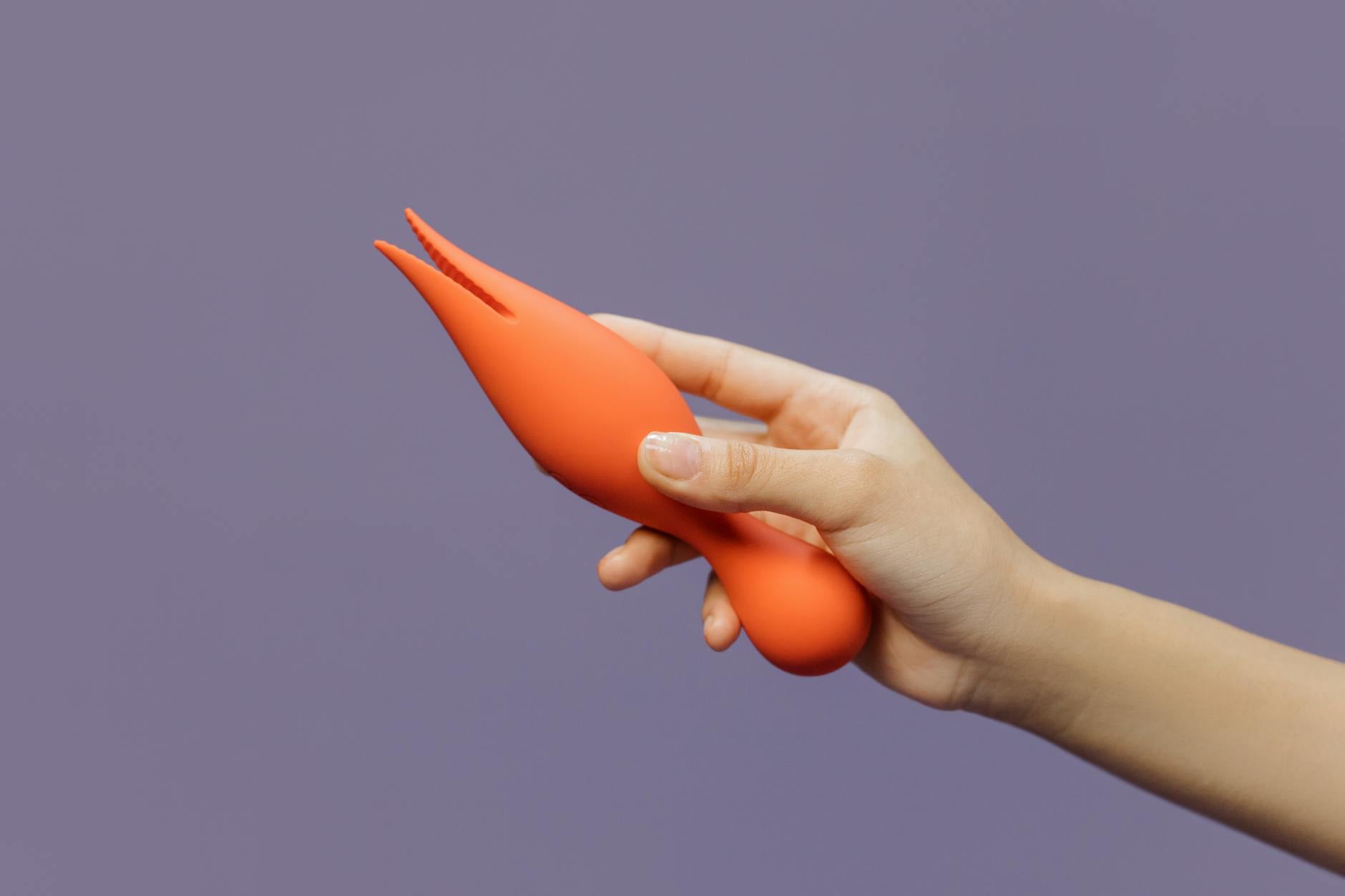
Show them the toy. Let them hold it, feel it, understand how it works. I'm serious. A lemon clitoral vibrator feels completely different in your hand than it does in theory. Seeing it, touching it, understanding the button and the intensity levels removes the intimidation factor by like 80%.
Talk about how you'll integrate it. Will you use it on yourself while they're inside you? Will they use it on you? Will it be foreplay or the main event? None of these are wrong. But saying it out loud beforehand means the moment isn't surprising or confusing.
Start slow. The first time you use a toy with a partner, don't make it the whole show. Bring it in mid-foreplay when you're both already aroused. This way, it's an addition to something that's already working, not a replacement for connection.
Keep talking. "Does this feel good?" "Should I try a different pattern?" "Do you want to touch me while I'm using it?" The conversation during sex is not separate from the intimacy. It is the intimacy.
The deeper thing that's actually happening
When you introduce a toy to a new partner, you're not introducing a vibrator. You're introducing honesty. You're saying: "I know what I like. I'm not going to hide it or perform something else. And I want you here for that."
That's vulnerable. And partners who can meet that vulnerability tend to be worth keeping around. They tend to be secure enough in themselves to understand that your pleasure is not their job. It's shared. Your clitoral vibrator is a tool you're inviting them to participate in, not a condemnation of them.
The couples who move through this conversation successfully report feeling more connected afterward, not less. Because you've just communicated about something that matters to you, and they chose to engage with it. That's intimacy.
FAQ: Common questions about this conversation
Should I mention my toy before we've had sex at all?
No. You want to establish that the baseline attraction and chemistry are there first. Once you've slept together a couple of times and you know there's real physical connection, that's when this conversation belongs.
What if I don't have a toy yet? Should I buy one before I bring it up?
You can go either way. Some people prefer to have it already, so the conversation feels concrete. Others prefer to make it a thing you choose together, which can feel collaborative. Neither is wrong. I lean toward having it, because it shows you're serious and thoughtful, not floating an idea.
Is it weird to use a lemon clitoral vibrator with a partner when I also use it solo?
Not even a little. Your body doesn't reset based on who's in the room. If a toy works for you, it works for you. Using it with a partner is just expanding the context, not replacing anything.
What if they want to use the toy on me but I'm embarrassed about how I react?
Your reactions during sex are human. They're real. And a partner worth having finds them hot, not embarrassing. If you're worried about being "too loud" or "not staying still" or "taking too long," those are normal worries. Naming them out loud can help. "I sometimes get really into it and make noise." "I like to move around." "Sometimes it takes me a while to get there." This is not oversharing. This is helpful context.
How long should we wait into a relationship before bringing this up?
There's no magic timeline. But you want to be past the first few weeks of pure novelty. Once you've had a few nights together and there's some genuine comfort, you're in the window. This is usually somewhere between week two and week six. Any longer and you're creating unnecessary secrecy around something normal.
What if we've been together a while and I'm just now bringing it up?
It's never too late. The conversation might feel a little more loaded if it's coming after months or years of not mentioning it, because they might wonder "why now?" But that's actually an opportunity for honesty. "I've been thinking about this for a while, and I didn't know how to bring it up. But I trust you now, and I want to explore this." That's beautiful. That's relationship growth.
Should I be worried this will become the only way I can orgasm with them?
Not unless you're already worried about that with yourself. If you can orgasm without a toy, you can still orgasm without a toy. Adding an option doesn't remove the original option.
The bottom line
Your nervousness makes sense. You're vulnerable. You're asking someone new to know you more fully. But that vulnerability is also the pathway to real connection. A partner who can hear "I want to explore pleasure with this tool" and respond with curiosity rather than defensiveness is someone worth going deeper with. And a partner who gets weird or defensive? That's actually useful information about compatibility, too.
The lemon vibrator is just a toy. The conversation is what matters. And you're ready for it.