Here's the thing about starting over
New relationships can feel like standing on a cliff. You want to be close to someone, but there's this quiet fear that if you ask for what you actually want in bed, they'll bolt. So you go quiet. You perform a version of yourself that feels safe instead of real. And suddenly the intimacy you were hoping for gets smaller and smaller until it's barely there at all.
The good news? A lemon vibrator can actually solve this. Not by magic, but by giving you back control. When you're the one setting the pace, showing your partner how your body responds to pleasure, and inviting them into that experience, the vulnerability stops feeling one-sided. It becomes mutual. And that changes everything.
Why a lemon vibrator is different for new relationships
Let me be direct: using a vibrator with a new partner requires trust you might not have built yet. A lemon clitoral vibrator works differently than a traditional wand or internal toy. The suction pattern means you're not pushing, thrusting, or taking up space. You're receiving. You're in control. And that matters psychologically in a new relationship where power dynamics are still settling.
A clitoral vibrator like the Lem gives you three specific advantages. First, it's visibly separate from intercourse, so it doesn't feel like a replacement for your partner's body. Second, the sensation is concentrated and precise, which means you can reach orgasm more reliably even when you're nervous (and new relationship nerves are real). Third, it shifts the dynamic from "does my partner know what I need" to "here's what I need, and I'm letting you be part of it."
That last part is crucial for rebuilding intimacy after a breakup or in early dating when you're still figuring out whether this person is trustworthy. A lemon sucker gives you the toolkit to find out.
Start the conversation before you start the toy
This is not optional. The single biggest mistake people make is trying to surprise a partner with a toy or sneaking it in during sex. It tanks trust. Instead, pick a moment outside the bedroom. When you're both relaxed. When you can actually talk.
Try something like: "I've been thinking about ways to feel more comfortable and connected with you. I want to explore using a toy together. Would you be open to that?" Notice you're not asking permission for your pleasure. You're inviting them into it. Big difference.
If they react with hesitation, ask what's underneath it. Is it insecurity? Fear that they're not enough? A misconception about what a lemon vibrator actually does? Most of the time, it's one of those three. And most of the time, a five-minute conversation about what you're actually trying to accomplish dissolves the resistance entirely.
The first time: go slow and stay connected
You're going to want to rush this. Don't. Your nervous system is reading every signal your partner sends, and rushing signals anxiety. Slow signals confidence.
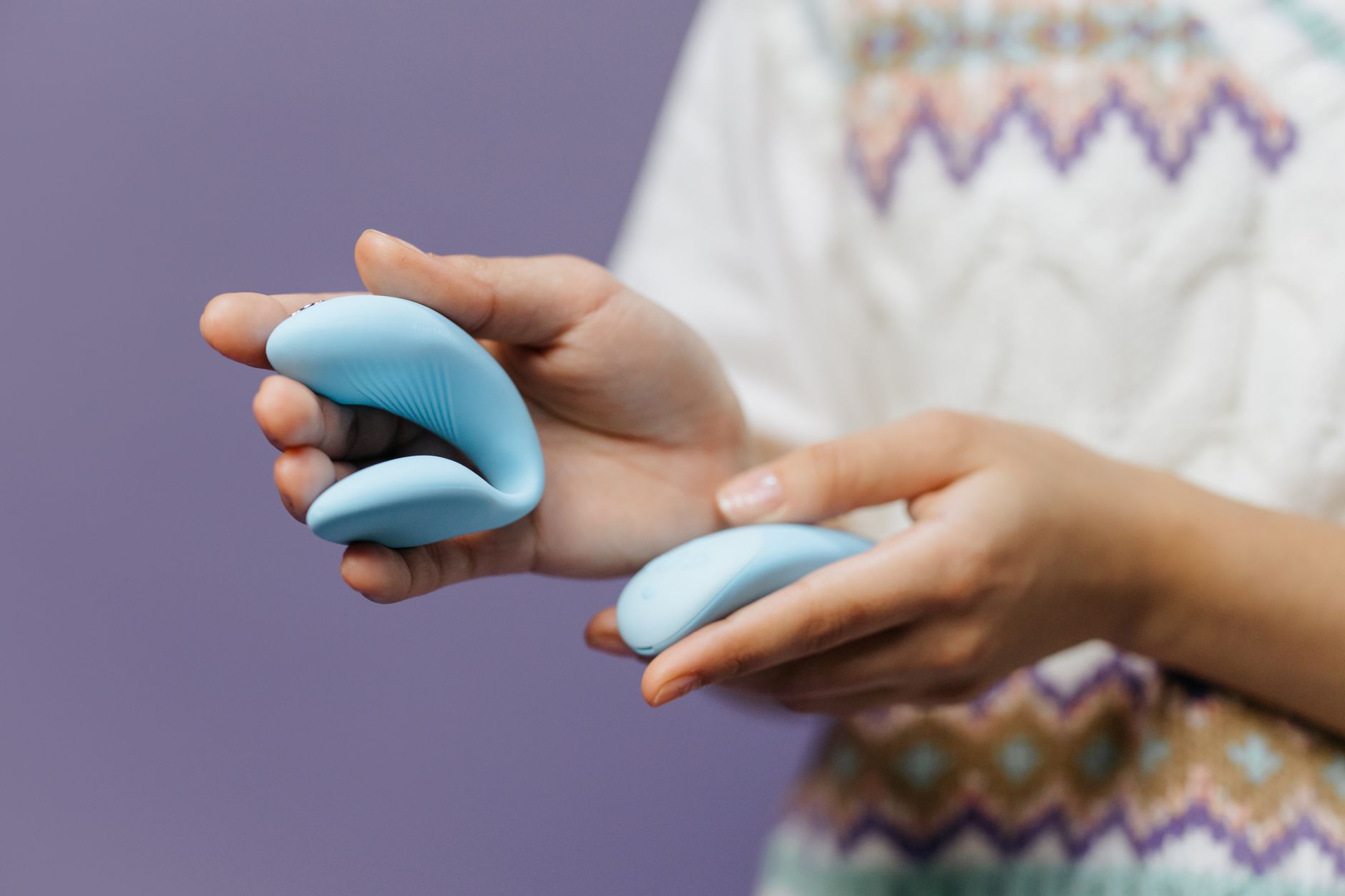
Start by showing them the toy outside of sex. Let them hold it. Turn it on so they can hear the pattern. Explain what suction feels like and why you chose a lemon clitoral vibrator. This is foreplay, actually. It's about familiarity and consent and your partner seeing that you're intentional, not impulsive.
When you do use it together for the first time, start with lower intensity settings. A lemon vibrator usually has multiple pattern options. Start at level 1 or 2. You're not trying to reach maximum sensation. You're trying to reach comfort. That's different.
Here's what helps: keep eye contact or stay close enough to touch your partner. Don't hide. Using a clitoral vibrator can feel exposing even in a healthy relationship, but when you can see your partner's face and know they're enjoying watching you enjoy yourself, the exposure converts to something else. Confidence. Power.
When pleasure gets complicated
Sometimes in a new relationship, arousal takes longer. You're not fully relaxed yet. Your brain is still scanning for threat instead of letting go into sensation. This is completely normal, and it's where many people make a critical mistake: they assume the toy isn't working and give up.
Actually, this is when a lemon clitoral vibrator proves its value. Budget 15-20 minutes. Start with a lot of foreplay before you even touch the toy. When arousal takes longer to build, external pressure makes it worse. Internal permission makes it better.
Talk to your partner while you're using it. Let them know what feels good. Ask them to do something specific with their hands or mouth while you use the toy. This keeps the focus mutual. It also gives your nervous system the data it needs: "This person is here for my pleasure, not just tolerating it."
The role of lubrication in building trust
This might sound tangential, but it's not. When you're nervous, your body doesn't always produce enough natural lubrication. It's a stress response. A lemon vibrator works beautifully with lube, so have it there before you start. Water-based, always.
Why does this matter for intimacy? Because when you say "I need lube," you're telling your partner: I'm tuned into my own body. I know what it needs. I'm going to make sure this feels good for me. That's not selfish. That's the opposite. That's you saying "my pleasure matters, and I'm going to take responsibility for it instead of waiting for you to figure it out."
New partners usually find this incredibly attractive. It removes the pressure on them to read your mind. It gives them permission to focus on what they actually enjoy instead of performing guesswork.
When to introduce it to your routine
Don't make the lemon sucker the main event every time you have sex. That backfires. Instead, weave it in. Use it during foreplay sometimes. Use it solo a few times so your partner can watch and learn what you actually respond to. Use it together when you want to take the pressure off penetration.
Variety is what keeps intimacy alive, especially in new relationships where you're still learning each other's rhythms. A lemon clitoral vibrator is one tool in a much larger toolkit. When it's one option among many, it actually strengthens connection instead of making it feel mechanical.
What to do if something doesn't feel right
Maybe the intensity is too much. Maybe you feel self-conscious. Maybe your partner's touch while you're using the toy feels off. Any of these things can happen, and they're not failures. They're data.
Stop. Talk about it immediately. "I need to pause. Let's try something different." That sentence, said with kindness, actually deepens trust faster than a perfect encounter ever could. Because what you're communicating is: "My comfort matters more than avoiding awkwardness."
Rebuilding intimacy after heartbreak means learning that your needs aren't selfish, your body isn't something to apologize for, and your pleasure matters as much as anyone else's. A lemon vibrator is a tool for that learning. But the real work happens in the conversation.
The bigger picture
Using a lemon clitoral vibrator in a new relationship isn't about the toy. It's about learning to show up whole instead of edited. It's about giving your partner the chance to love the real version of you, not the version you think is acceptable.
When that happens, intimacy stops being something you're trying to build and starts being something that just exists. You've earned the right to relax. And that's when the best stuff actually begins.
People also ask
How do I know if my new partner will be open to using a lemon vibrator?
The only way to know is to ask. But here's a framework: people who love you want you to feel good. If your partner reacts with disgust or refusal, that's information about whether they're actually ready for honest intimacy. Sometimes the answer is "not yet." Sometimes it's "not with me." Both are useful to know early.
Can using a lemon vibrator make my new partner feel inadequate?
It can if you frame it that way. Frame it instead as: "Here's something that helps me relax and feel pleasure. I want to share this with you because I trust you." The difference between "I need this because you're not enough" and "I want this because you're here" is everything. One closes the door. The other opens it.
What if I'm the partner who's new to this and feels overwhelmed?
Asking questions is your best move. "What does this feel like?" "Can I touch it while you use it?" "Show me where feels good." When you're curious instead of defensive, your partner relaxes. And when your partner relaxes, you can actually pay attention to what's happening instead of spiraling in your own insecurity.
Is it normal to take multiple attempts before using a lemon vibrator feels comfortable with a new partner?
Completely. Your nervous system needs time to learn that this person is safe. That you won't be judged. That pleasure is allowed. Trying three times and feeling different each time is exactly how that learning happens. The fourth time is usually the charm.
Should I use a lemon vibrator every time we have sex or just sometimes?
Sometimes is better. Variety keeps intimacy interesting and prevents it from becoming routine. Mix it with partnered touch, oral sex, penetration, and extended foreplay without any toys. The lemon sucker is most powerful when it's one choice among many, not a dependency.
What's the best way to clean a lemon vibrator before and after using it with a partner?
Wash with warm water and mild soap, or use a toy cleaner designed for silicone. Dry thoroughly with a lint-free cloth. Do this before sex, not just after. It's another signal to your partner: I'm thoughtful about this. I'm taking it seriously. That consideration builds trust faster than almost anything else.