
How to Use a Lemon Vibrator When Your Partner Thinks Toys Ruin Intimacy
Let's be real. One of you wants to bring a lemon vibrator into the bedroom. The other one hears that and immediately thinks: replacement. Threat. Proof that something is broken.
This is the conversation I see most often in my practice, and it's almost never about the toy itself. It's about what the toy seems to represent.
What your partner is actually worried about
When someone resists the idea of a vibrator, they're rarely objecting to silicone or suction technology. They're worried about a few specific things, usually unspoken.
First, there's the worry about inadequacy. "If she needs a vibrator, that means I'm not enough." This one runs deep because it touches on something primal: the fear of not being able to satisfy your partner. Never mind the data (most women need external clitoral stimulation to orgasm; it has nothing to do with partner adequacy). The feeling lands first, facts second.
Second, there's the intimacy question. "Toys feel clinical. Clinical feels like distance." The assumption is that pleasure tools are for solo use, that they create a wall between partners rather than a bridge.
Third, sometimes it's practical anxiety. "I don't know how to use it." "It'll be weird." "What if it hurts her." That uncertainty masquerades as resistance.
All of these are legitimate conversations, but they require the right framing to actually land.
The frame that actually works
Here's what I tell couples in my office: a lemon vibrator isn't an alternative to your partner. It's information you're gathering together.
When you use a clitoral vibrator with your partner, you're not replacing their touch. You're learning. You're learning exactly how your partner likes to be stimulated. You're learning where sensation lives in their body. You're learning what an orgasm looks like when there's no performance pressure. That's not distance. That's precision.
Think about other contexts where you use tools together. If you're cooking, a sharp knife makes the meal better. If you're stretching, a foam roller helps you go deeper. Neither of those things diminishes the primary activity. They amplify it.
A lemon vibrator works the same way. It's a tool that helps you both understand pleasure better. And in my experience, that understanding strengthens intimacy rather than weakening it.
How to start the conversation (not the argument)
Timing is everything. Don't bring this up during sex, right after sex, or when you're frustrated. Bring it up on a neutral day, in a neutral space, when you both have time to actually think.
Start with curiosity, not demand. "I've been thinking about trying something new in the bedroom. I'm curious what you think about it." Let them ask questions before you explain. Often their first question reveals what they're actually worried about.
If the worry is about inadequacy, address it directly. "I want to be clear: this isn't about you not being enough. It's about learning more about what feels good for me. And I want you there while I'm learning." That's different from sneaking around with a toy.
If the worry is about weirdness, reframe it. "It might feel awkward the first time, and that's normal. We can go slow. We can laugh about it. We can stop anytime." Permission to be clumsy together takes away a lot of the pressure.
If the worry is practical, get practical. "There are different intensities. We can start at the lowest setting. I can show you how it works first, alone, so you feel comfortable with it." Knowledge dissolves fear faster than reassurance.
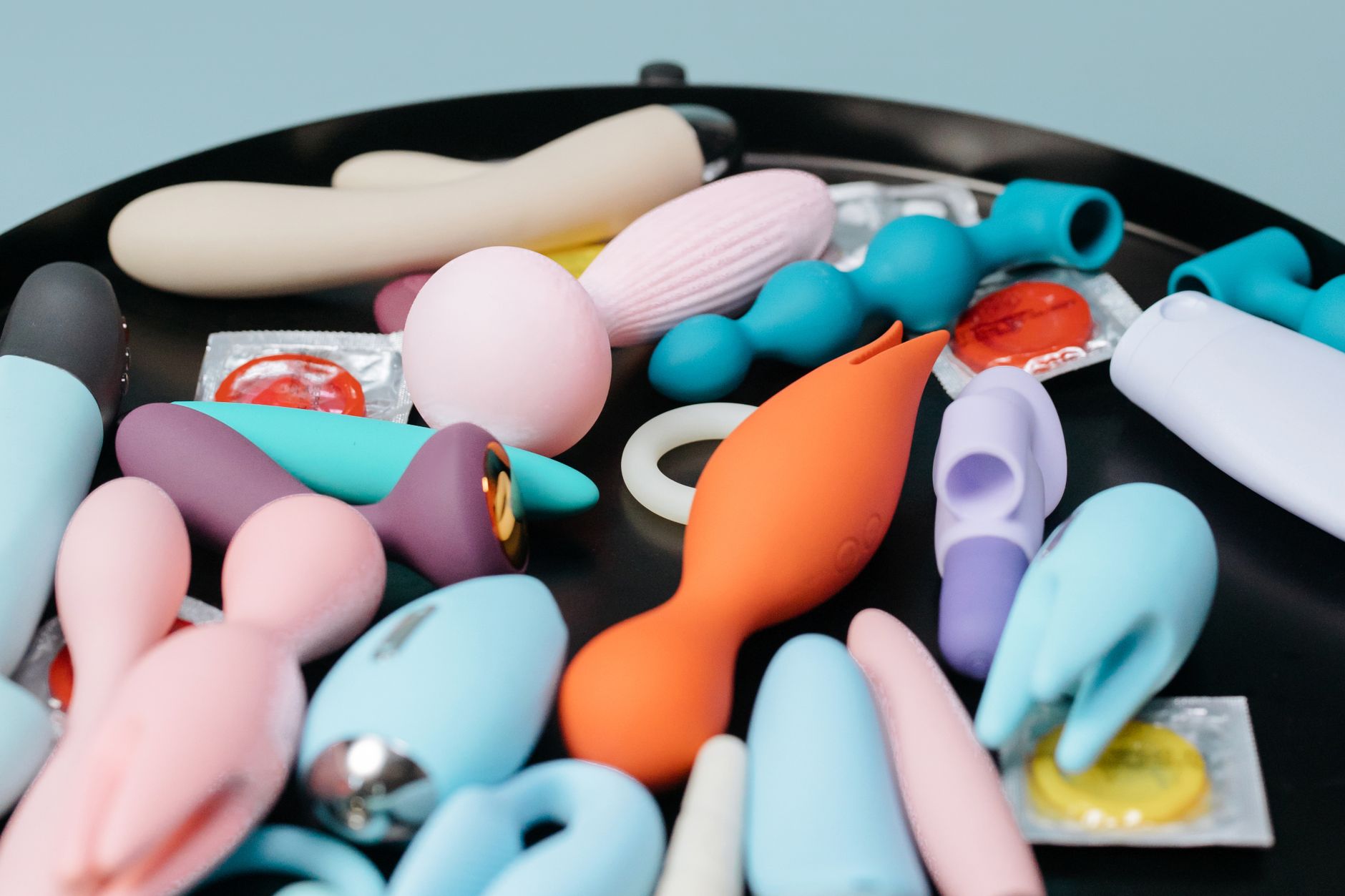
Photo by cottonbro studio on Pexels
Why a lemon vibrator specifically helps with this
If you're introducing a partner to the idea of toys, a lemon clitoral vibrator like the Lem actually removes several objections at once.
First, it's visibly different from a traditional vibrator. It doesn't look medicinal. It looks like a small piece of design, which it is. That matters psychologically. Your partner sees it and thinks "carefully made object" rather than "clinical device."
Second, suction technology feels more like touch than buzzing does. A lemon vibrator creates a gentle pulse rather than a buzz. For partners who are worried that toys feel "unnatural," suction feels closer to human sensation. That's not just marketing. It's neurologically true. The stimulation pattern is different, and different often feels less clinical.
Third, and this matters more than people realize, you can use it together more easily. With a traditional vibrator, there's a specific choreography: you hold it, your partner watches, or you use it on yourself while they're near. A lemon vibrator invites collaboration in a different way. Your partner can hold it. You can both explore what feels good. It becomes a shared discovery instead of a solo performance.
Making it actually work the first time
Okay, so you've had the conversation. They're willing to try. Here's how to make sure it doesn't feel weird or performative.
Start with something that removes performance pressure. That might mean using it when you're not trying to have sex. Maybe it's a Saturday afternoon. Maybe it's just exploring sensation without the goal of an orgasm. Remove the stakes and you remove the anxiety.
Start low. The Lem has multiple intensity levels. Begin at pattern 1 or 2. Let your body adjust. Let your partner watch and learn. They're gathering information: where you tense, where you relax, what your breathing does, what your facial expression is like when something feels good. That information is intimate. It matters.
Talk. Not philosophically. Practically. "That feels good there." "Slower." "Can you hold it steady." Your partner is learning your body's language in a new way. They're useful. They're needed. They're not being replaced.
If it feels weird, say so. Weirdness is fine. Weirdness passes. What doesn't pass is pretending everything is fine when it isn't. Better to laugh, take a break, and try again in a week.
What changes after that first time
Here's what I see happen in my practice consistently: after a couple uses a vibrator together once, the resistance softens. Not always immediately, but it softens.
Why? Because the fear of the unknown disappears. It turns out it's not clinical. It turns out it's not threatening. It turns out it actually opens up a conversation about pleasure that was hard to have before.
Many partners tell me afterward that they learned things about their significant other's body they didn't know after years together. That knowledge is a form of intimacy. A good one.
Some couples find that introducing a tool gives them permission to talk about pleasure more openly. Instead of sex being this thing that happens, it becomes something you collaborate on, adjust, experiment with. That's not a loss of spontaneity. That's the opposite. That's deepening.
Photo by cottonbro studio on Pexels
If your partner still says no
Sometimes after the conversation, after the explanation, after the reassurance, your partner still doesn't want to try. That's a different conversation.
A "no" to toys isn't always about toys. Sometimes it's about feeling unheard in general. Sometimes it's about control or fear that runs deeper than the vibrator itself. Sometimes it's about a mismatch in how you both view pleasure. If that's the case, that's worth exploring with a couples therapist, not worth fighting about.
But here's what I know: most partners who say no initially say yes once they understand what's actually happening. It's not about them being replaced. It's about them being let in. That's a different story. And once they understand the story, most people want to be part of it.
Intimacy isn't about doing everything the same way your parents did. It's about learning each other, over and over, for as long as you're together. A lemon vibrator is just one more way to do that learning. Your partner can be part of that. Usually, they want to be.
When to call in backup
If there's a deeper pattern of your partner rejecting things that matter to you, or if you find yourself having to convince them to care about your pleasure, that's bigger than vibrators. That might be worth talking to a relationship counselor about. Check out our guide on rebuilding intimacy after a long break from sex if you're navigating that specific dynamic.
Similarly, if your partner is interested in trying but you're the one who's nervous, that's real too. How to introduce a lemon vibrator to your partner without awkwardness covers that angle more directly.
The conversation itself is the bridge. Once you're talking about pleasure openly, everything shifts.
FAQs
Will using a vibrator with my partner make them feel inadequate?
Only if you frame it that way. The reframe that works: "This isn't about you not being enough. This is about me learning more about my own body, and I want you here with me while I do that." A partner who loves you wants you to feel good. A vibrator doesn't threaten that. It serves it.
How do I bring up toys if my partner has already said they think toys are clinical or impersonal?
First, acknowledge what they said. "I know you've said toys feel clinical. I understand that." Then offer a different experience. "What if we tried one where it's about us learning together, not about me using something alone?" The experience often changes the perception.
Can I use a lemon vibrator with my partner if we've never talked about pleasure directly?
You can, but it's harder. A vibrator is more powerful if it comes with context. Having a conversation first about what feels good, what you'd like to explore, what you're curious about creates a container where the tool makes sense. If you haven't had that conversation, start there. The vibrator is step two, not step one.
What if my partner wants to use the lemon vibrator on me but I feel self-conscious?
Self-consciousness is normal. It often passes once you realize your partner is genuinely enjoying learning what makes you feel good. You might also start with using it on yourself while they're nearby, then gradually move toward them holding it. No rush. Comfort builds slowly.
Does using a lemon vibrator together actually increase intimacy?
In my clinical experience, yes. Not because of the vibrator itself, but because of the conversation that has to happen around it. When couples talk openly about pleasure, learn each other's bodies more precisely, and remove shame from the equation, intimacy deepens. The vibrator is the catalyst, not the cause.
How do I respond if my partner asks why they can't make me orgasm without a toy?
Honestly: "My body works a certain way. Most vulvas do. It's not about you. It's biology. And I'd rather experience pleasure with you than without it." Then offer them a role. "You could hold it. You could watch. You could help me learn what I like so we both know." They're still essential.
The bigger picture
Partner resistance to toys usually isn't about the toy. It's about vulnerability, fear of inadequacy, or old scripts about what intimacy "should" look like. Once you name what's actually being worried about, you can address it.
Your pleasure matters. Your partner's comfort matters. Those two things aren't in conflict if you're willing to have the conversation where you're both honest.
A lemon vibrator is just a tool. But the conversation that brings it into the bedroom? That's where real intimacy lives.