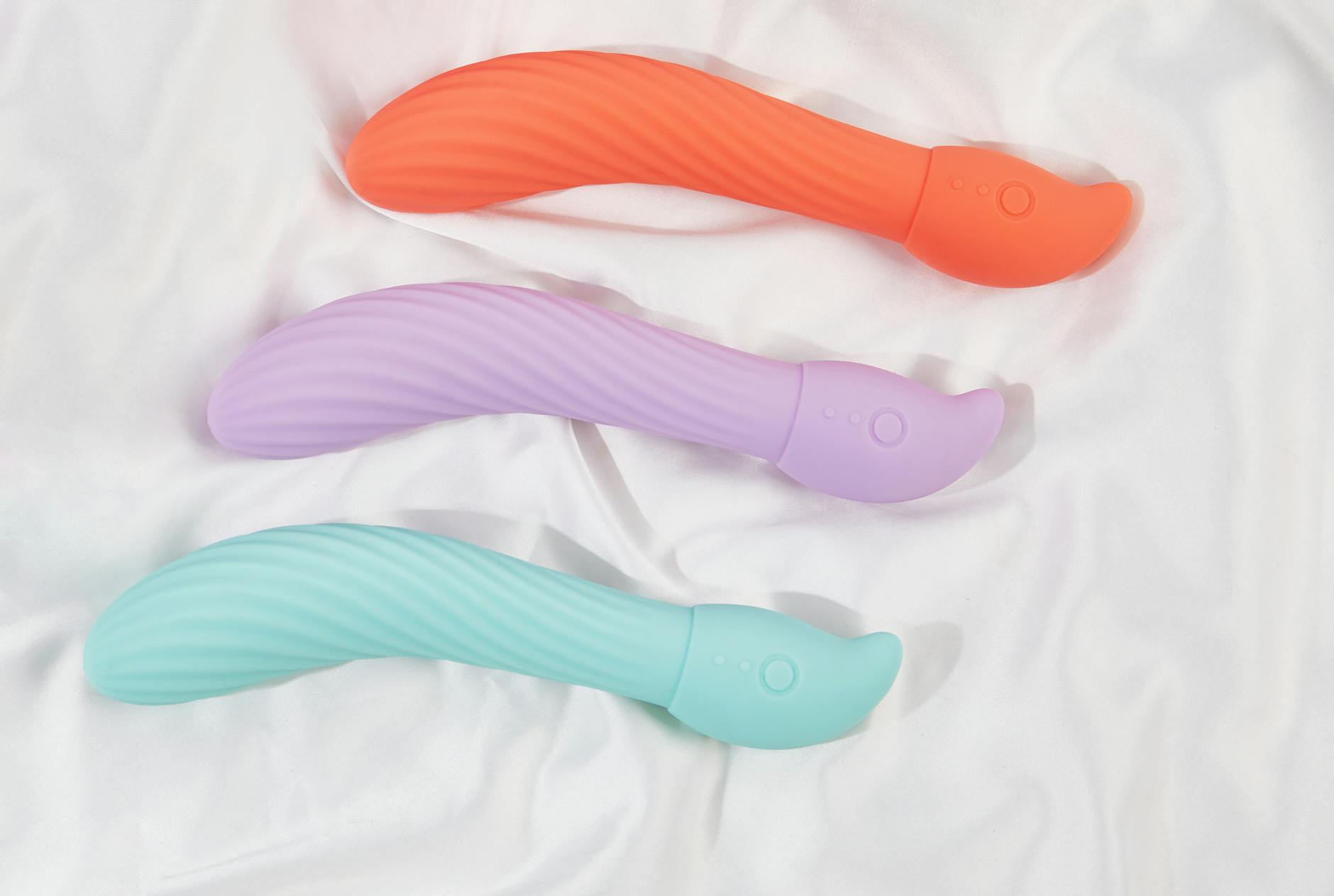
Why Lemon Vibrators Work Better When Orgasms Feel Distant or Weak
The thing nobody tells you about weak orgasms
You're not broken. Your body isn't failing you. And no, it's usually not about sensitivity loss.
When orgasms feel muted, distant, or almost academic (like your body's going through the motions while your mind watches from three rooms away), the culprit is almost never the neurological hardware. It's almost always the gap between what you're feeling and what you're experiencing. And that gap widens for predictable reasons.
After working with couples for years, I've noticed something consistent: people describe weak orgasms right before they describe feeling disconnected from their partner, their body, or both. The pleasure went flat because the intimacy foundation shifted. Then they assume they need a more intense toy. They don't. They need a tool that bridges that gap differently.
That's where lemon vibrators come in.
Why traditional vibrators stop working when disconnection happens
Most vibrators are loud, rumbly, and demand your full attention. They're designed to overwhelm sensation. Which works great when you're present and engaged. But when you're emotionally checked out, they amplify the distance between body and mind instead of closing it.
You feel the vibration. Your brain doesn't feel connected to it. So you keep turning up the intensity, chasing a sensation that already happened once and now feels impossible to access again.
Here's the mechanical difference. Traditional wand vibrators and bullet toys work through broad, aggressive vibration patterns. They're bottom-up sensory stimulation. Lemon clitoral vibrators use gentle suction combined with subtle pulsing. That's top-down reconnection. You feel pulled into the sensation rather than bombarded by it.
That difference matters when your nervous system is protecting you.
The neuroscience of emotional numbness
When there's been relational conflict, trust shifts, or even just prolonged stress, your body learns to dim sensation as self-protection. It's not conscious. Your nervous system decides pleasure feels unsafe right now, so it turns down the volume. This isn't depression or dysfunction. It's a perfectly rational adaptation.
Traditional vibration can feel hostile in that state. It's too much, too fast, asking your body to feel something you've been trained not to feel.
Lemon vibrators, though? The suction mechanism is gentler. It doesn't demand. It invites. You're not trying to reach an orgasm threshold. You're reconnecting to sensation at whatever intensity feels right today. No performance pressure. No forced escalation.
Many of my clients report that lemon vibrators feel almost meditative in this space. You can use them for 20 minutes at pattern 1 and feel genuinely satisfied instead of frustrated that you couldn't reach climax.
How suction rewires sensation when emotions get in the way
There are three things that make lemon clitoral vibrators different when pleasure feels distant.
First, suction creates a seal. This isn't just texture. It's a physiological change. Suction stimulates a different nerve pathway than vibration alone. When your body's been muting sensation, a novel sensation pathway can bypass some of that protective numbness. Your nervous system goes "oh, this is new" instead of "I already know this doesn't feel good."
Second, the intensity ceiling is lower but the sensation is denser. You can't accidentally set a lemon vibrator to maximum and overwhelm yourself. The highest settings are still subtle. This means you stay in control. You're not bracing for impact. You're exploring at your own pace.
Third, suction requires less direct friction. When disconnection has made your tissue sensitive or your nervous system reactive, friction can feel irritating. Suction accomplishes similar stimulation without that grinding contact. It feels more like presence than pressure.
That combination is why people who've given up on toys report that lemon vibrators actually work.
When weak orgasms point to deeper patterns
Let's be honest. Sometimes weak orgasms aren't a sensation problem. They're a trust problem.
If the orgasm flatness showed up around the time your relationship shifted (arguments, infidelity, long periods apart), no vibrator will fix that. The vibrator can help you rebuild sensation safety once you've addressed the relational piece. But it's not the primary tool.
Here's what I recommend: if your orgasms went flat and you can trace it to a specific event or period of distance, talk to your partner about it first. Couples rebuilding physical intimacy after emotional distance need to address the emotional rupture alongside the physical reconnection. A lemon clitoral vibrator can be part of that process, not the whole solution.
That said, sometimes the numbness outlasts the conversation. Even after you've talked through it, even after things improve, your nervous system stays guarded. That's where the vibrator becomes genuinely useful. It's proof to your body that pleasure is safe again.
The reset protocol that actually works
Here's what I suggest to clients starting a lemon vibrator after experiencing distance from orgasm.
Set a 10-day exploration window. Don't go in looking for orgasm. Look for sensation. This sounds like it contradicts what you want, but it doesn't. You're retraining your nervous system.
Start with pattern 1 or 2. Spend five full minutes on the gentlest setting before you consider changing anything. Most people skip this. Don't.
Use it alone the first few times. You're reclaiming your own pleasure first. Partner involvement comes after you've rebuilt your baseline.
Don't use lubricant at first. The suction needs skin contact. Once you're comfortable, add a tiny amount of water-based lube if you want a different glide sensation.
Notice what you notice. Are there moments of genuine sensation? Relief? Curiosity? That's success. Orgasm is not the metric yet.
By day 10, most people report that sensation has come back online. Orgasms may still feel quieter than they used to, but they feel connected. That reconnection is the actual win.
Why this works better than turning to your partner for the answer
I know the instinct. If pleasure went flat with your partner, you want your partner to fix it. That puts massive pressure on both of you. You're waiting for them to reignite something they didn't cause you to lose. They feel blamed for your body's response.
Using a lemon vibrator independently reframes the whole thing. You're not asking your partner to provide sensation you've lost. You're doing the solo nervous-system work first. Then you bring that reconnected sensation back to partnership. The dynamic flips from "fix me" to "here's what I've reclaimed."
Partners respond way better to that. And honestly? Your pleasure feels different to you too when you've done that groundwork.
When weak orgasms are actually about physical changes
Sometimes the flatness isn't emotional. Sometimes it's hormonal, medication-based, or neurological.
Hormonal shifts (perimenopause, menopause, post-partum) can absolutely dampen sensation. If you're over 50 and dealing with vaginal dryness, that changes how clitoral vibrators feel. Some medications (SSRIs, blood pressure drugs, hormonal contraceptives) are notorious for numbing orgasm.
If you suspect the flatness is physiological rather than relational, check with your doctor before spending money on a new toy. But here's the thing. Even when there's a physical component, lemon vibrators often work better than traditional options because they require less friction and create a different stimulation pathway. So it's worth trying regardless.
The role of anticipation and rhythm
Weakness in orgasm also hints at something less obvious: you've stopped building anticipation.
When couples are distant or partners feel disconnected, foreplay shrinks. Anticipation dies. You go straight to the device without the nervous-system ramp-up that makes sensation land hard. It's like jumping into a pool without getting wet gradually. Your body never acclimates.
Lemon vibrators reward you for rebuilding that rhythm. They're not about speed. You can't force them. They invite you to slow down, build pressure gradually, explore the arc of arousal across 20 or 30 minutes instead of cramming it into five.
That slower arc often produces the strongest orgasms people report after periods of distance.
FAQ: When weak orgasms and distant pleasure collide
Q: Can a lemon vibrator work if I'm on an antidepressant that numbs orgasm?
A: Maybe partially. SSRIs definitely flatten sensation for many people. A lemon clitoral vibrator can sometimes access pleasure better than other tools because the suction pathway is different. But the real fix is talking to your prescribing doctor about dosage, timing, or alternatives. Some work better for sexual function than others. Don't rely on the vibrator to solve a medication issue, but yes, try it.
Q: How long does it take for sensation to come back if I use a lemon vibrator consistently?
A: Most people notice something within 7 to 14 days. Some within 2 to 3 days. It depends on how long you've been numb and how much the numbness is emotional versus physical. Start with the 10-day exploration window I mentioned. If nothing shifts after that, it's probably not a sensation-recovery situation. It might be a deeper trust issue that needs attention first.
Q: Is it normal for a lemon vibrator to feel less intense than my old wand?
A: Completely. Lemon clitoral vibrators are designed to be gentler and more nuanced. If you're comparing intensity level-for-level, the lemon won't match a traditional wand. That's not the weakness. That's the point. You're using a different mechanism entirely.
Q: Should I tell my partner I'm using a lemon vibrator to reconnect to sensation?
A: That depends on your relationship and your comfort. If there's been distance, bringing it up honestly ("I want to rebuild sensation on my own first") can actually deepen trust. But don't use it as ammunition ("I need this because you don't do X anymore"). Frame it as self-care that eventually serves both of you.
Q: Can weak orgasms mean something is seriously wrong?
A: Weak or absent orgasms can point to hormonal changes, medication effects, nerve damage, or pelvic floor dysfunction. They can also point to relationship friction, stress, depression, or disconnection from your body. If flatness is new and persistent, see a gynecologist or sex therapist. Lemon vibrators are a tool, not a diagnosis.
Q: What if I'm worried I've lost the capacity to orgasm at all?
A: The capacity doesn't disappear. But your access to it can feel locked off by stress, disconnection, or physiological changes. If you've never had an orgasm with toys, that's a different conversation than recovering one you've lost. The approach is similar (slow, exploratory, no pressure) but the expectation is different. Either way, a lemon vibrator rewards patience and presence over intensity.
Bringing it back: reconnection is the real tool
Here's what I want you to know. Weak orgasms or that feeling of being emotionally distant from your own pleasure isn't a sign your body's broken. It's a sign something shifted. Maybe it was relational. Maybe it was hormonal. Maybe it was just time and stress and life.
A lemon vibrator can't fix the shift itself. But it can bridge the gap while you're doing the real work. Whether that work is rebuilding trust with your partner, adjusting your medication, addressing stress, or just learning to be present with your body again.
The suction, the gentle pulsing, the lower intensity ceiling. None of that is accidental design. It's built for people who are reconnecting to themselves, not people chasing sensation for the first time.
Start with pattern 1. Give it time. Notice what changes. That's where the real pleasure comes back.