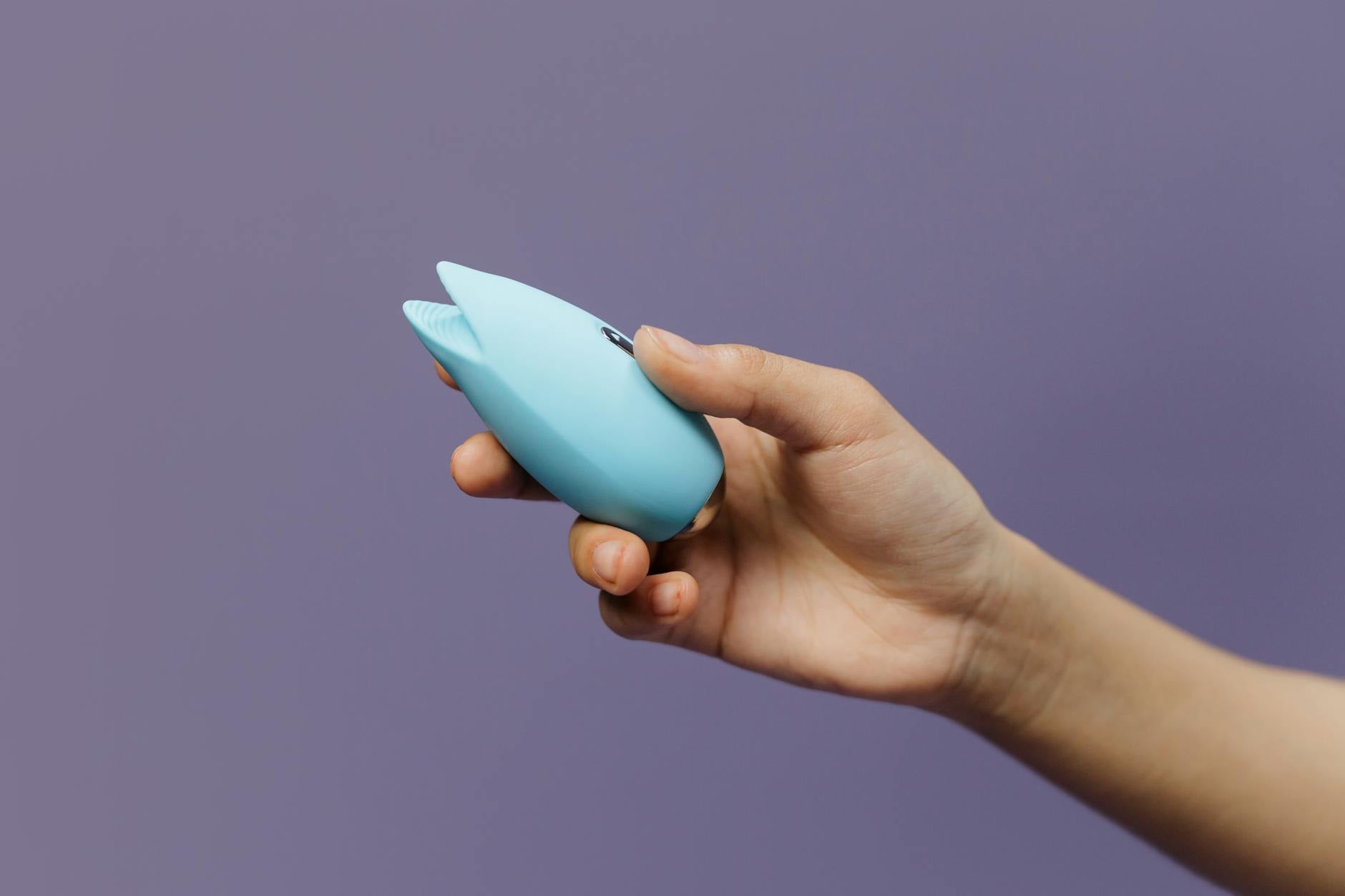
Let's talk about finding what actually works for you
Here's what I hear most often from people who've just gotten a lemon vibrator. They start on the highest setting, feel overwhelmed, and assume they're broken. They're not. They just haven't found their intensity sweet spot yet.
The thing about lemon clitoral vibrators is that they use suction technology, which means the intensity scale works differently than a traditional vibrator. More power doesn't always mean more pleasure. It means more sensation, which is a completely different animal.
Why intensity matters more with suction technology
A traditional vibrator hums at different speeds. A lemon vibrator creates rhythmic suction that pulls gently at the clitoral tissue. This changes the equation. What feels like a whisper on setting two can feel like a conversation starter on setting four. By setting five or six, you're having a loud debate.
The reason this matters is sensitivity. Your clitoris doesn't have a fixed sensitivity level. It changes across your cycle, with arousal, with stress, with what's happening in your relationship, and with how much time you've spent using the lemon vibrator itself. A setting that felt perfect last month might feel too intense this month. That's not a problem. It's just information.
People with thinner clitoral tissue often find the lower settings more pleasurable. People with thicker tissue sometimes need mid-range settings to feel anything at all. And here's the weird part: sometimes the most intense orgasm comes not from the highest setting, but from the exact right setting for your body on that particular day.
How to start: the baseline test
Turn on the lemon vibrator at setting one. I'm serious. Don't skip this. Most people find setting one feels like nothing, which is exactly the point. You need a baseline.
Now move to setting two. Notice the difference. Does it feel gentle? Tingly? Is there a rhythm you can feel, or does it feel diffuse? Spend maybe 30 seconds here. You're not trying to finish. You're calibrating.
Move to setting three. Then four. You're building a mental map of what each level feels like on your body, without pressure or urgency. This part takes maybe three to five minutes total, and it matters more than you'd think.
Stop when you reach a setting that feels like too much. Not good but intense. Just too much. That's your ceiling for right now. Your sweet spot is usually one or two settings below that.
The arousal effect (why timing changes everything)
I want to flag something that surprises people: the same intensity level feels different depending on how aroused you are. When you're just starting out, setting three might feel strong. Twenty minutes in, setting three might feel almost gentle.
This is not a defect. This is your nervous system doing its job. As arousal builds, your clitoral tissue swells slightly, blood flow increases, and your nerve sensitivity adjusts. The lemon vibrator creates suction, so as your tissue responds, the sensation actually changes dynamically.
What this means practically: don't lock yourself into one setting for the whole session. Start lower. As you warm up, you might drift up a setting or two. And honestly, some of the most intense orgasms happen when you're already aroused and you introduce a slightly higher setting for a few seconds, then drop back down. The contrast matters.
Tuning in without overthinking
Here's the distinction I always make with my clients: there's a difference between exploring and problem-solving. Exploring is "let me see what this feels like." Problem-solving is "why isn't this working."
If you're in explore mode, just play. Turn on setting two. Move the lemon vibrator around slightly. Notice if the sweet spot is directly over your clitoris or slightly to the side. Some people find the edge of the suction more comfortable than the center. Try it angled differently. Notice rhythm versus sustained suction.
If you're in problem-solve mode ("this doesn't feel good"), that's when you slow down. Go back to setting one. Add lubricant. Let yourself warm up for longer before introducing the vibrator. Sometimes what feels uncomfortable at setting three feels perfect at setting two with five extra minutes of foreplay.
The partner conversation
If you're using the lemon vibrator with a partner, the intensity question gets a new layer. Some people worry that needing a higher or lower setting means something's wrong with the relationship or the stimulation their partner provides. It doesn't.
I recommend being direct about it. "I'm exploring what feels best for me right now, and it's setting three." That's not critique. That's data. And here's the thing: once you know your preference, your partner knows too. That clarity is actually incredibly sexy because it removes the guesswork.
Troubleshooting the intensity mismatch
If even setting one feels too intense, try using the lemon vibrator over clothing. Seriously. Cotton or soft fabric between the vibrator and your clitoris completely changes the sensation. It feels more muted and diffuse. You can absolutely explore that way until your body settles in.
If the lowest settings feel like nothing at all, check a few things. Is the lemon vibrator fully charged? Low battery dims the sensation noticeably. Are you using lubricant? Water-based lube helps the suction seal better, which makes every setting feel stronger. Is your clitoris fully exposed? Sometimes positioning matters. Even a millimeter shifts where the suction pulls.
If you're recovering sensation after desensitization, you might need to stay in the lower settings for longer. Your nerve endings are recalibrating, and pushing intensity too fast actually slows that down.
The mid-session shift
One thing I've noticed people don't talk about: you can change intensity during a session without shame or weirdness. Some people like to start low and build. Some people like to stay at one setting the entire time. Some people like to spike the intensity near the end. Some people get there and then turn it down because they want to float in a lower intensity for a while.
Your lemon vibrator settings are not a commitment. They're a dial. Use it like one.
Intensity and the orgasm gap
There's research showing that people often struggle to orgasm with partners because solo exploration and partnered sex use completely different intensity patterns. When your lemon clitoral vibrator closes the orgasm gap after 40, part of what's happening is that you're learning your own intensity map.
Once you know that, you can communicate it. "I need about 60 seconds at setting two to warm up, then I prefer three to four." That specificity is actually what closes the gap. It's not that the vibrator is magic. It's that you finally know what you want.
When intensity preference shifts
Hormone cycle, stress, relationship status, medications, pelvic floor tension, age, confidence level. All of these shift your intensity preference. The lemon vibrator you loved at setting five last summer might feel perfect at setting three this winter. That's not regression. That's adaptation.
I tell people to check in with themselves seasonally. Maybe every few months, run the baseline test again. See if your sweet spot has moved. It probably has. And that's good information.
The patience piece
Honestly, the biggest mistake I see is people trying to rush to the "right" setting. There's no right setting. There's only the setting that feels best to you, right now, in this body, on this day. And that's always worth finding.
People also ask
Why does my lemon vibrator feel stronger on some days than others?
Your clitoral sensitivity shifts with your cycle, stress levels, medication, and even time of day. Hydration, blood sugar, and how relaxed your pelvic floor is all affect sensation. This is totally normal. It's not the vibrator changing. It's your body recalibrating.
Can I damage my clitoris by using too high an intensity?
Not from intensity alone. What matters is that you're not experiencing pain. Intense sensation is fine. Pain means stop. If you're using a lemon vibrator at a high setting and it hurts, drop down. If pain persists across multiple sessions, check with a gynecologist. But sensation, even very strong sensation, doesn't cause damage.
Is it normal to need a higher intensity over time?
Some people do, some don't. Your body adapts to sensation, so sometimes what felt intense becomes the new baseline. But this isn't like gambling, where you need bigger and bigger hits. If you notice you're creeping up settings, take a break for a few days. Your sensitivity recalibrates quickly. And remember, maintaining long-term pleasure means varying your routine.
What's the difference between intensity and power?
Intensity is how strong the sensation feels to you. Power is the technical output of the vibrator. A lemon vibrator at setting three has consistent power, but the intensity you experience depends on arousal, positioning, and how you're using it. You can't really control power yourself, but you absolutely control intensity through settings, positioning, and warm-up time.
Should my partner help me find my intensity sweet spot?
It's helpful if they're involved, but it's even more helpful if you explore solo first. Once you know what you like, explaining it to a partner is way easier than trying to figure it out together while there's performance pressure. Solo exploration removes the audience effect, which actually helps you discover what feels good faster.
How do I know if I'm using the right intensity for my body type?
There's no one-to-one rule. Some people with thinner tissue love higher settings. Some with thicker tissue prefer lower. The only way to know is to test. Start low, build, and notice. Pay attention to what makes you feel most in your body, most present, most like yourself. That's the right intensity.
Find your sweet spot. It's worth the few minutes of exploration. And if it changes next month, that's fine too.